Word Explanation
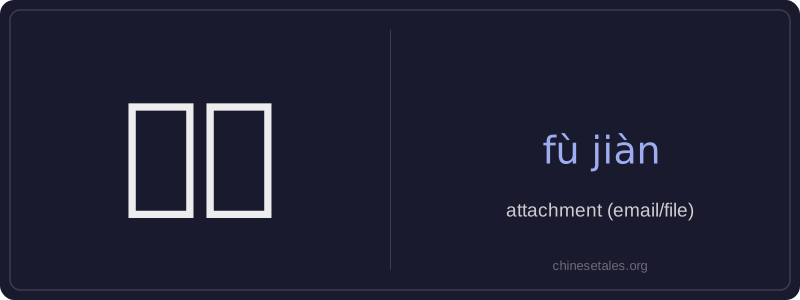
‘附件’ (fù jiàn) literally combines ‘附’ (fù), meaning ‘to attach’ or ‘to append’, and ‘件’ (jiàn), a general measure word for items, documents, or objects. Together, they form a noun meaning ‘attachment’—specifically, a file attached to an email or electronic message. It is the standard, formal term used in digital communication, office settings, and official correspondence in Chinese.
Unlike English, where ‘attachment’ can refer to emotional bonds, ‘附件’ is almost exclusively technical and functional. It never means ‘appendage’ or ‘accessory’ in physical or biological senses. You’ll see it in email interfaces (e.g., ‘添加附件’ – ‘add attachment’), work instructions, and IT support contexts. While occasionally used metaphorically in very rare bureaucratic phrasing (e.g., ‘本文件附件’ – ‘annexes to this document’), its overwhelming usage is digital and document-related.
Example Sentences
Related Words
认同
‘认同’ (tóng rèn) is a verb meaning ‘to ident
面条
‘面条’ (miàn tiáo) literally means ‘flour str
背后
背后 literally means 'back + behind' and functions
认为
‘认为’ (rèn wéi) is a transitive verb meaning
不对
不对 (bù duì) literally combines 不 (bù), meani
中学
'Zhōngxué' literally combines 'zhōng' (middle)
见面
见面 literally means 'see face' — combining 见 (t
外语
‘外语’ literally means ‘outside language’ —