Word Explanation
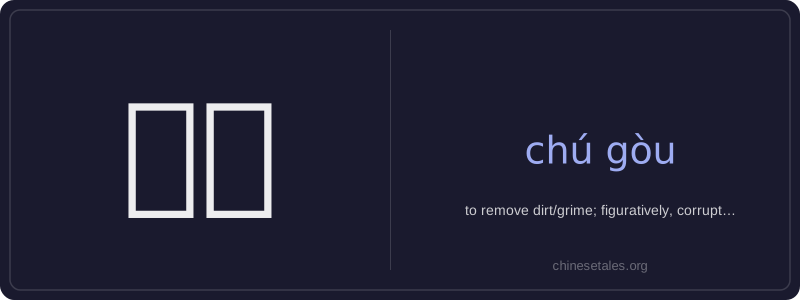
除垢 literally means 'to remove grime'—'除' (chú) means 'to remove, eliminate', and '垢' (gòu) means 'dirt, grime, or buildup', especially the kind that accumulates on surfaces over time (e.g., limescale in kettles, plaque on teeth, or oily residue on kitchen appliances). The term is commonly used in both physical cleaning contexts and metaphorical ones.
In everyday life, 除垢 appears in product names (e.g., water purifier filters labeled '除垢功能'), maintenance instructions, and health-related discussions—for instance, dental professionals may refer to tartar removal as '牙齿除垢'. Figuratively, it extends to social or political contexts meaning 'eradicating corruption', though this usage is formal and often appears in official media or policy documents. It carries a neutral-to-positive connotation when applied to hygiene, but a serious, reform-oriented tone in abstract usage.
Example Sentences
Related Words
认同
‘认同’ (tóng rèn) is a verb meaning ‘to ident
面条
‘面条’ (miàn tiáo) literally means ‘flour str
背后
背后 literally means 'back + behind' and functions
认为
‘认为’ (rèn wéi) is a transitive verb meaning
不对
不对 (bù duì) literally combines 不 (bù), meani
中学
'Zhōngxué' literally combines 'zhōng' (middle)
见面
见面 literally means 'see face' — combining 见 (t
外语
‘外语’ literally means ‘outside language’ —