Word Explanation
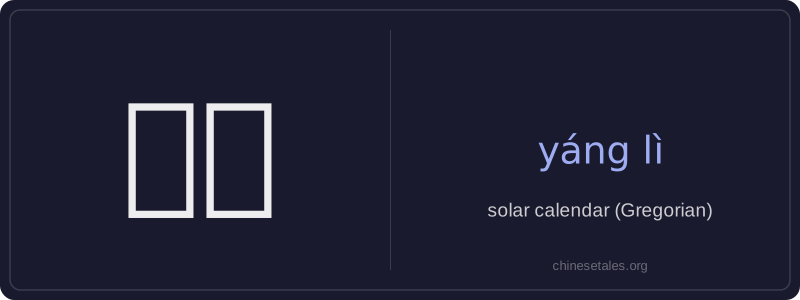
‘阳历’ (yáng lì) literally means ‘solar calendar’ — ‘阳’ (yáng) refers to the sun, and ‘历’ (lì) means ‘calendar’ or ‘almanac’. It specifically denotes the Gregorian calendar, the internationally standard civil calendar used in China for official, business, and daily scheduling purposes. Unlike the traditional Chinese lunar calendar (农历, nóng lì), which is based on moon phases and seasonal agricultural cycles, the solar calendar aligns with Earth’s orbit around the sun and divides the year into 365 or 366 days across 12 fixed months.
In modern China, ‘阳历’ is the default calendar for birthdays, contracts, school terms, public holidays (except those tied to the lunar calendar like Spring Festival), and digital devices. People often say ‘阳历生日’ to mean a birthday according to the Gregorian date, distinguishing it from one calculated by the lunar calendar. Though both calendars coexist, ‘阳历’ dominates formal and administrative contexts, reflecting China’s integration of global timekeeping standards while preserving cultural traditions through the lunar system.
Example Sentences
Related Words
认同
‘认同’ (tóng rèn) is a verb meaning ‘to ident
面条
‘面条’ (miàn tiáo) literally means ‘flour str
背后
背后 literally means 'back + behind' and functions
认为
‘认为’ (rèn wéi) is a transitive verb meaning
不对
不对 (bù duì) literally combines 不 (bù), meani
中学
'Zhōngxué' literally combines 'zhōng' (middle)
见面
见面 literally means 'see face' — combining 见 (t
外语
‘外语’ literally means ‘outside language’ —