Word Explanation
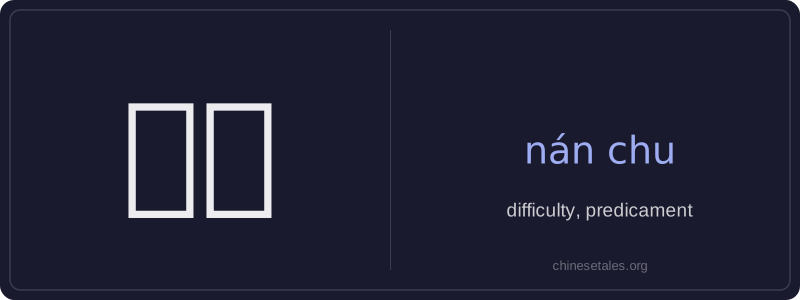
难处 (nán chù) is a noun meaning 'difficulty', 'hardship', or 'predicament'—a situation where someone faces obstacles, pressure, or emotional strain. The first character 难 means 'difficult' or 'hard', while 处 here is pronounced chù and means 'place' or 'situation'; together, they literally suggest 'a place of difficulty', i.e., a challenging circumstance one finds oneself in. Unlike the verb phrase 难处 (nán chǔ), which means 'to treat badly' or 'to mistreat' (rare and literary), this noun form is common in everyday speech and writing.
难处 is often used to express personal struggles—financial, relational, health-related, or psychological—and frequently appears after words like 有 (yǒu), 没 (méi), or 在 (zài) to indicate existence, absence, or location of difficulty. It carries a tone of empathy and realism, not abstraction: it refers to tangible, lived hardship rather than theoretical complexity.
Example Sentences
Related Words
认同
‘认同’ (tóng rèn) is a verb meaning ‘to ident
面条
‘面条’ (miàn tiáo) literally means ‘flour str
背后
背后 literally means 'back + behind' and functions
认为
‘认为’ (rèn wéi) is a transitive verb meaning
不对
不对 (bù duì) literally combines 不 (bù), meani
中学
'Zhōngxué' literally combines 'zhōng' (middle)
见面
见面 literally means 'see face' — combining 见 (t
外语
‘外语’ literally means ‘outside language’ —