Word Explanation
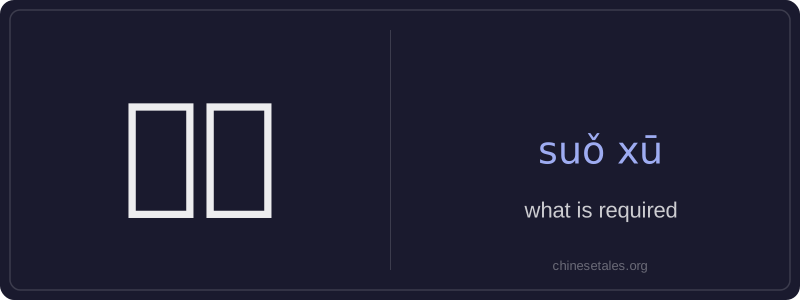
所需 (suǒ xū) literally means 'what is required' or 'that which is needed'. It functions as a noun phrase formed by the structural particle 所 (suǒ), which nominalizes the following verb, and the verb 需 (xū), meaning 'to need' or 'to require'. Together, 所需 transforms the idea of needing into a concrete noun referring to necessary items, resources, or conditions. It is commonly used in formal, written, or administrative contexts — such as medical instructions, official forms, or technical documentation — rather than casual speech.
This phrase often appears before nouns with 的 (e.g., 所需材料, 'required materials') or stands alone as a subject or object (e.g., 'Please submit all 所需'). Unlike the more colloquial 需要 (xūyào), 所需 carries a slightly more impersonal, procedural tone and frequently implies necessity imposed by rules, standards, or objective circumstances — especially in healthcare, education, or bureaucratic settings.
Example Sentences
Related Words
认同
‘认同’ (tóng rèn) is a verb meaning ‘to ident
面条
‘面条’ (miàn tiáo) literally means ‘flour str
背后
背后 literally means 'back + behind' and functions
认为
‘认为’ (rèn wéi) is a transitive verb meaning
不对
不对 (bù duì) literally combines 不 (bù), meani
中学
'Zhōngxué' literally combines 'zhōng' (middle)
见面
见面 literally means 'see face' — combining 见 (t
外语
‘外语’ literally means ‘outside language’ —