Word Explanation
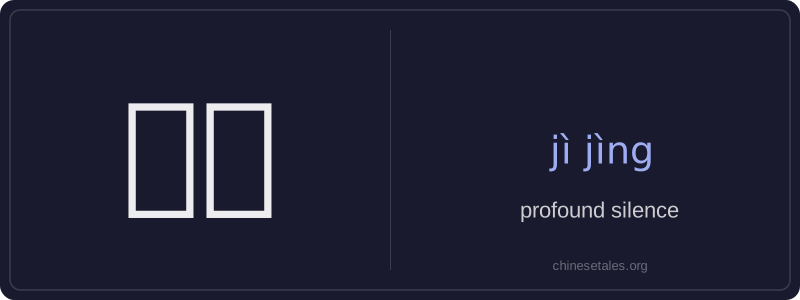
寂静 (jì jìng) describes a deep, profound silence — not just absence of sound, but a stillness that feels weighty, peaceful, or even solemn. It combines 寂 (jì), meaning 'lonely' or 'desolate', and 静 (jìng), meaning 'quiet' or 'calm'; together, they intensify each other to evoke silence that is complete, undisturbed, and often atmospheric — like the hush of a snow-covered forest at dawn or an empty temple courtyard at night.
This word is commonly used in descriptive writing, poetry, and narrative prose to set mood or emphasize contrast (e.g., sudden noise breaking the 寂静). It’s more literary and evocative than common words like 安静 (ān jìng) and carries emotional resonance — sometimes serene, sometimes eerie or melancholic, depending on context. It rarely appears in casual speech but frequently appears in formal descriptions of natural settings, sacred spaces, or moments of introspection.
Example Sentences
Related Words
认同
‘认同’ (tóng rèn) is a verb meaning ‘to ident
面条
‘面条’ (miàn tiáo) literally means ‘flour str
背后
背后 literally means 'back + behind' and functions
认为
‘认为’ (rèn wéi) is a transitive verb meaning
不对
不对 (bù duì) literally combines 不 (bù), meani
中学
'Zhōngxué' literally combines 'zhōng' (middle)
见面
见面 literally means 'see face' — combining 见 (t
外语
‘外语’ literally means ‘outside language’ —