Word Explanation
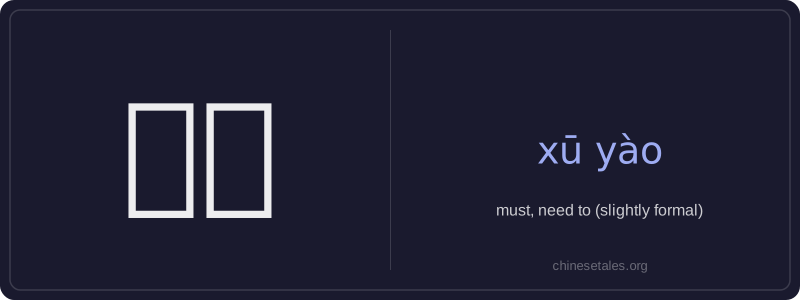
‘须要’ is a formal or literary verb meaning 'must' or 'need to', expressing necessity with a tone of obligation or requirement. It combines the characters 须 (xū), meaning 'must' or 'to be required', and 要 (yào), meaning 'to want' or 'to need'. Together, they reinforce the sense of imperative need—stronger than just 要 alone, but less forceful and more refined than 必须. It’s commonly used in official notices, academic writing, policy documents, and formal speech.
Unlike colloquial alternatives like 得 (děi) or informal 要 (yào), 须要 carries an elevated register and often appears in written contexts where precision and gravity matter—such as regulations ('此操作须要授权'), safety instructions, or scholarly commentary. It typically precedes a verb phrase (e.g., 须要检查, 须要提前预约) and does not take aspect particles like 了 or 过 directly after it—those attach to the following verb instead.
Example Sentences
Related Words
认同
‘认同’ (tóng rèn) is a verb meaning ‘to ident
面条
‘面条’ (miàn tiáo) literally means ‘flour str
背后
背后 literally means 'back + behind' and functions
认为
‘认为’ (rèn wéi) is a transitive verb meaning
不对
不对 (bù duì) literally combines 不 (bù), meani
中学
'Zhōngxué' literally combines 'zhōng' (middle)
见面
见面 literally means 'see face' — combining 见 (t
外语
‘外语’ literally means ‘outside language’ —