Word Explanation
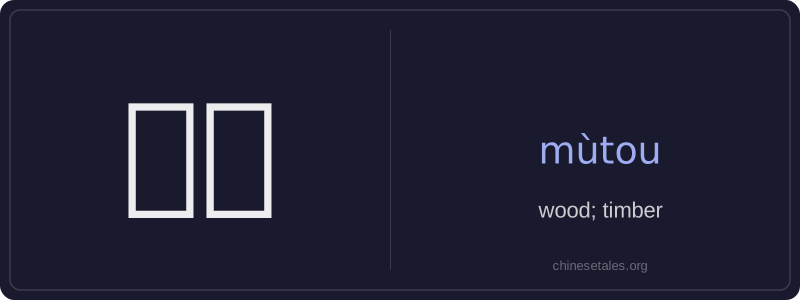
木头 (mùtou) literally combines 木 (mù), meaning 'tree' or 'wood', and 头 (tou), a common noun suffix that often denotes a physical object or material — here adding concreteness and colloquial weight. While 木 alone can mean 'wood' in formal or compound contexts (e.g., 木材, mùcái), 木头 is the everyday, spoken-term for 'wood' or 'timber' — referring to the raw, solid material cut from trees, whether as logs, planks, or unprocessed chunks.
It’s widely used in practical, hands-on contexts: carpentry, construction, firewood, crafts, or even metaphorically (e.g., 他像块木头 — 'He’s as dull as wood'). Unlike more technical terms like 木材 (timber as a commodity) or 树木 (trees as living plants), 木头 emphasizes the tangible, physical substance — rough, heavy, and natural. It’s neutral in register but leans informal; you’d say 木头 when pointing to a beam or picking up firewood, not in a forestry report.
Example Sentences
Related Words
认同
‘认同’ (tóng rèn) is a verb meaning ‘to ident
面条
‘面条’ (miàn tiáo) literally means ‘flour str
背后
背后 literally means 'back + behind' and functions
认为
‘认为’ (rèn wéi) is a transitive verb meaning
不对
不对 (bù duì) literally combines 不 (bù), meani
中学
'Zhōngxué' literally combines 'zhōng' (middle)
见面
见面 literally means 'see face' — combining 见 (t
外语
‘外语’ literally means ‘outside language’ —