Word Explanation
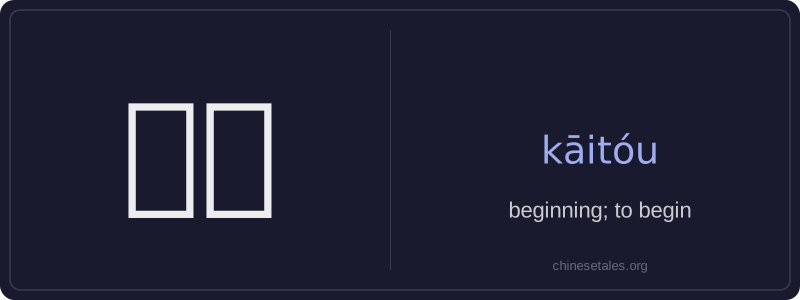
开头 (kāitóu) literally combines 开 (kāi, 'to open') and 头 (tóu, 'head'), evoking the image of the 'head' or 'front part' of something — hence its core meaning: 'beginning' or 'start'. As a noun, it refers to the initial part of an event, text, speech, or process — for example, the first paragraph of an essay or the opening minutes of a meeting. It emphasizes position in sequence rather than time alone.
As a verb, 开头 means 'to begin' or 'to start', often used in formal or literary contexts, or when initiating an action with intention — such as 开头发言 (to begin speaking) or 开头写信 (to begin writing a letter). It’s less common in casual speech than verbs like 开始 (kāishǐ) or 开动 (kāidòng), but remains frequent in written Chinese, storytelling, and structured communication.
Example Sentences
Related Words
认同
‘认同’ (tóng rèn) is a verb meaning ‘to ident
面条
‘面条’ (miàn tiáo) literally means ‘flour str
背后
背后 literally means 'back + behind' and functions
认为
‘认为’ (rèn wéi) is a transitive verb meaning
不对
不对 (bù duì) literally combines 不 (bù), meani
中学
'Zhōngxué' literally combines 'zhōng' (middle)
见面
见面 literally means 'see face' — combining 见 (t
外语
‘外语’ literally means ‘outside language’ —