Word Explanation
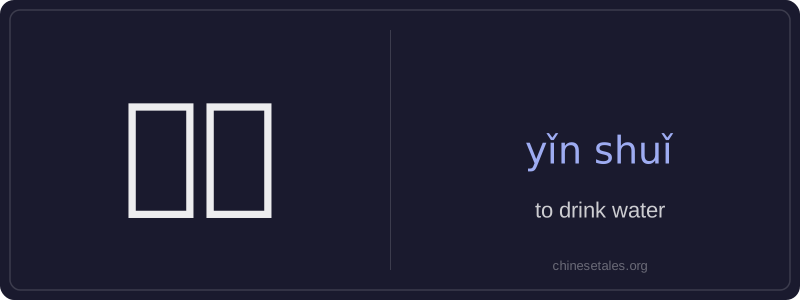
‘饮水’ literally combines ‘饮’ (to drink) and ‘水’ (water), forming a compound verb meaning ‘to drink water’. It is a formal, standard term used in both spoken and written Chinese, especially in health-related or instructional contexts — such as public health campaigns, medical advice, or daily habit reminders. Unlike the more colloquial ‘喝水’, ‘饮水’ carries a slightly elevated or neutral-register tone and is commonly found in official notices, textbooks, or scientific discussions about hydration.
The word emphasizes the act of consuming water specifically — not other beverages — and often implies intentionality or necessity, such as for health maintenance or survival. It frequently appears in fixed phrases like ‘饮水安全’ (safe drinking water) or ‘饮水思源’ (a proverb meaning ‘when drinking water, remember its source’). While grammatically identical to other verb-object compounds, ‘饮水’ is rarely used in casual conversation among friends; native speakers tend to prefer ‘喝水’ in everyday speech.
Example Sentences
Related Words
认同
‘认同’ (tóng rèn) is a verb meaning ‘to ident
面条
‘面条’ (miàn tiáo) literally means ‘flour str
背后
背后 literally means 'back + behind' and functions
认为
‘认为’ (rèn wéi) is a transitive verb meaning
不对
不对 (bù duì) literally combines 不 (bù), meani
中学
'Zhōngxué' literally combines 'zhōng' (middle)
见面
见面 literally means 'see face' — combining 见 (t
外语
‘外语’ literally means ‘outside language’ —