Word Explanation
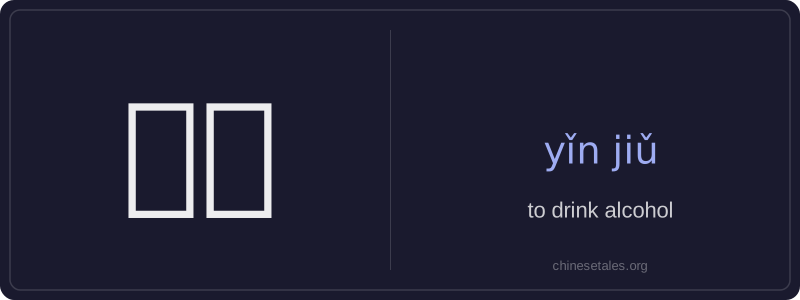
‘饮酒’ literally combines 饮 (yǐn), meaning 'to drink', and 酒 (jiǔ), meaning 'alcohol' or 'liquor'. Together, it means 'to drink alcohol' — a formal or neutral verb used to describe the act of consuming alcoholic beverages. Unlike the more colloquial phrase 喝酒 (hē jiǔ), 饮酒 carries a slightly literary, medical, or regulatory tone, often appearing in health advisories, legal contexts (e.g., drinking-and-driving laws), or classical or formal writing.
This term emphasizes intentionality and moderation — it’s commonly used in discussions about health risks, social customs, or responsible consumption. It rarely appears in casual speech among friends; instead, you’ll see it in public service announcements ('过量饮酒有害健康'), academic articles, or official guidelines. The compound is inseparable: you cannot insert objects or particles between the two characters, and it functions as a single verbal unit in sentences.
Example Sentences
Related Words
认同
‘认同’ (tóng rèn) is a verb meaning ‘to ident
面条
‘面条’ (miàn tiáo) literally means ‘flour str
背后
背后 literally means 'back + behind' and functions
认为
‘认为’ (rèn wéi) is a transitive verb meaning
不对
不对 (bù duì) literally combines 不 (bù), meani
中学
'Zhōngxué' literally combines 'zhōng' (middle)
见面
见面 literally means 'see face' — combining 见 (t
外语
‘外语’ literally means ‘outside language’ —