Word Explanation
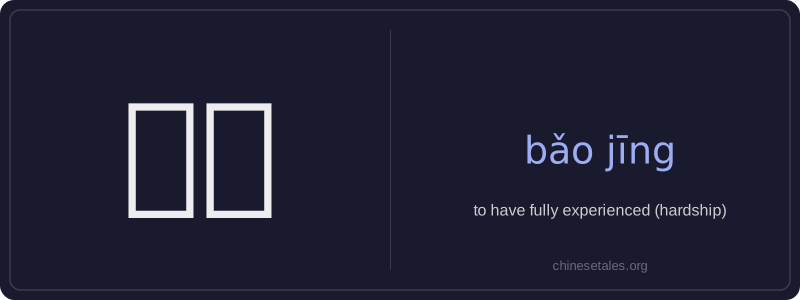
饱经 (bǎo jīng) is a literary verb meaning 'to have fully experienced' — especially hardship, adversity, or long-term challenges. The character 饱 (bǎo) literally means 'full' or 'satiated', suggesting completeness or thoroughness; 经 (jīng) means 'to experience', 'to go through', or 'to undergo'. Together, they convey the idea of having endured something so extensively that it has deeply shaped one’s character or perspective. It is rarely used for neutral or positive experiences — it almost always carries a connotation of resilience forged through difficulty.
This phrase appears frequently in formal writing, biographies, historical descriptions, and respectful references to elders or veterans. It often modifies nouns like 风霜 (fēng shuāng, 'wind and frost' — a metaphor for hardship), 沧桑 (cāng sāng, 'changes over time'), or 磨难 (mó nàn, 'ordeal'). While grammatically a verb, 饱经 usually functions attributively before a noun (e.g., 饱经风霜的脸) or as a predicate with an implied object (e.g., 他饱经沧桑).
Example Sentences
Related Words
认同
‘认同’ (tóng rèn) is a verb meaning ‘to ident
面条
‘面条’ (miàn tiáo) literally means ‘flour str
背后
背后 literally means 'back + behind' and functions
认为
‘认为’ (rèn wéi) is a transitive verb meaning
不对
不对 (bù duì) literally combines 不 (bù), meani
中学
'Zhōngxué' literally combines 'zhōng' (middle)
见面
见面 literally means 'see face' — combining 见 (t
外语
‘外语’ literally means ‘outside language’ —