Word Explanation
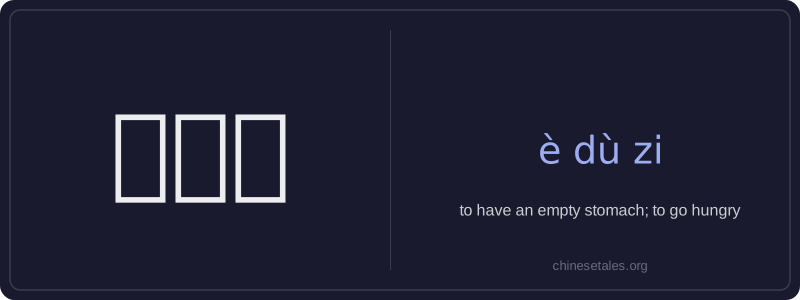
‘饿肚子’ literally combines ‘饿’ (to be hungry), ‘肚’ (stomach), and ‘子’ (a noun suffix). Together, it means ‘to have an empty stomach’ or ‘to go hungry’—emphasizing the physical state of hunger, often due to missing a meal or lacking food. It’s colloquial and commonly used in everyday speech, especially when describing involuntary or undesirable hunger, such as skipping breakfast or enduring food shortages.
The phrase functions as a verb and typically appears in subject–verb constructions, e.g., ‘他饿肚子了’ (He’s gone hungry) or ‘别让孩子饿肚子’ (Don’t let the child go hungry). Unlike the more neutral ‘饿了’ (I’m hungry), ‘饿肚子’ carries a subtle connotation of discomfort, neglect, or hardship—it’s rarely used in formal writing but very common in conversation, parenting contexts, and discussions about nutrition or poverty.
Example Sentences
Related Words
认同
‘认同’ (tóng rèn) is a verb meaning ‘to ident
面条
‘面条’ (miàn tiáo) literally means ‘flour str
背后
背后 literally means 'back + behind' and functions
认为
‘认为’ (rèn wéi) is a transitive verb meaning
不对
不对 (bù duì) literally combines 不 (bù), meani
中学
'Zhōngxué' literally combines 'zhōng' (middle)
见面
见面 literally means 'see face' — combining 见 (t
外语
‘外语’ literally means ‘outside language’ —