Word Explanation
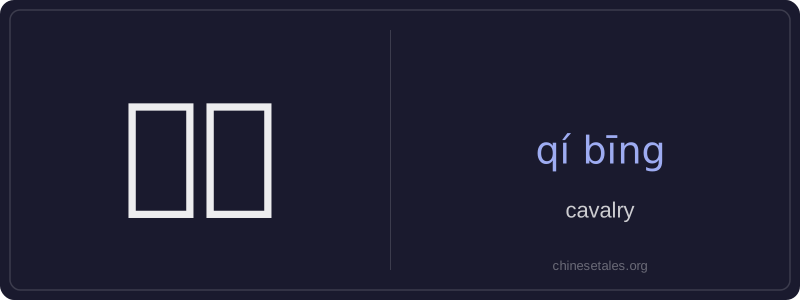
骑兵 (qí bīng) literally means 'riding soldiers' — 骑 (qí) means 'to ride' (especially horses), and 兵 (bīng) means 'soldier' or 'troops'. Together, they refer to mounted military forces, historically composed of soldiers on horseback trained for speed, mobility, and shock combat. Though largely obsolete in modern warfare, the term remains important in historical, literary, and ceremonial contexts.
In contemporary Chinese, 骑兵 appears mainly in history books, war films, museum exhibits, and military terminology discussing past conflicts. It can also be used metaphorically to describe a fast-acting, highly mobile group — for example, in business or sports commentary — though this is rare and stylistically marked. Unlike general terms like 军队 (army) or 士兵 (soldier), 骑兵 specifies a distinct tactical unit defined by its mode of transport and historical role.
Example Sentences
Related Words
认同
‘认同’ (tóng rèn) is a verb meaning ‘to ident
面条
‘面条’ (miàn tiáo) literally means ‘flour str
背后
背后 literally means 'back + behind' and functions
认为
‘认为’ (rèn wéi) is a transitive verb meaning
不对
不对 (bù duì) literally combines 不 (bù), meani
中学
'Zhōngxué' literally combines 'zhōng' (middle)
见面
见面 literally means 'see face' — combining 见 (t
外语
‘外语’ literally means ‘outside language’ —