Word Explanation
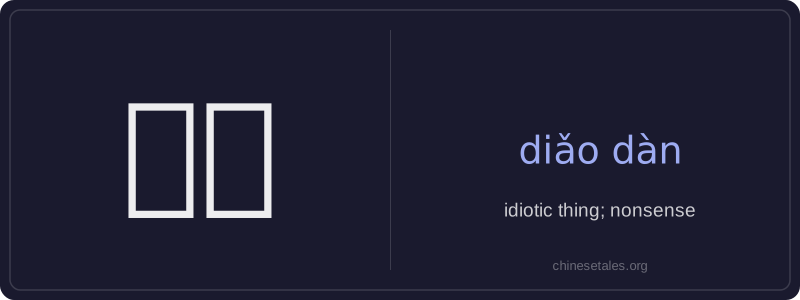
‘鸟蛋’ literally means ‘bird egg’, but in colloquial Mandarin it functions as a vulgar euphemism for ‘idiotic thing’ or ‘nonsense’. The character 鸟 (diǎo) is a common minced oath—originally meaning ‘bird’ but widely used as a stand-in for the coarse word for penis, lending strong dismissive or contemptuous force. 蛋 (dàn) reinforces this by evoking ‘testicle’ in slang contexts. Together, 鸟蛋 carries heavy informal, masculine, and often humorous or frustrated connotations—used to reject ideas, plans, or statements as foolish, pointless, or absurd.
This term is strongly informal and mildly offensive; it’s common in spoken language among friends or in moments of irritation, but never appropriate in formal settings, with elders, or in writing. It reflects a broader pattern in Chinese slang where animal-related terms are repurposed for expressive, face-saving profanity. Learners should recognize it when heard but avoid using it unless highly confident about context and relationship.
Example Sentences
Related Words
认同
‘认同’ (tóng rèn) is a verb meaning ‘to ident
面条
‘面条’ (miàn tiáo) literally means ‘flour str
背后
背后 literally means 'back + behind' and functions
认为
‘认为’ (rèn wéi) is a transitive verb meaning
不对
不对 (bù duì) literally combines 不 (bù), meani
中学
'Zhōngxué' literally combines 'zhōng' (middle)
见面
见面 literally means 'see face' — combining 见 (t
外语
‘外语’ literally means ‘outside language’ —