Word Explanation
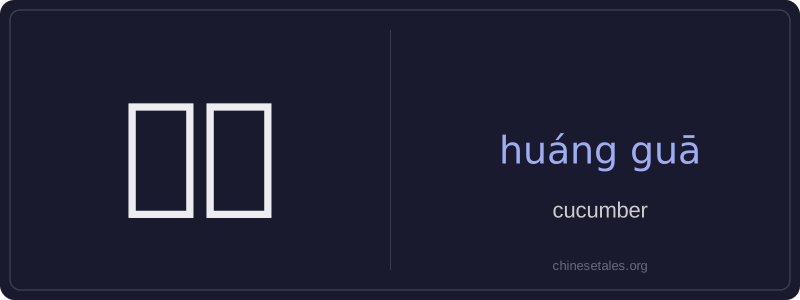
‘Huáng guā’ literally means ‘yellow melon’, reflecting its historical name—though modern cucumbers are typically green when fresh. The character 黄 (huáng) means ‘yellow’, and 瓜 (guā) means ‘melon’ or ‘gourd’, a broad category of vine-grown fruits and vegetables in Chinese. Despite the color reference, the term has been used for centuries to refer specifically to the long, slender, crisp vegetable known in English as cucumber.
This word is common in everyday speech, cooking, markets, and health contexts—often praised for its cooling properties in traditional Chinese medicine. It appears in dishes like凉拌黄瓜 (liáng bàn huáng guā, cold cucumber salad) and is frequently eaten raw, pickled, or stir-fried. Unlike English, Chinese doesn’t distinguish between ‘cucumber’ and ‘gherkin’ with separate words; context or modifiers (e.g., 小黄瓜 xiǎo huáng guā for ‘mini cucumber’) clarify size or variety.
Example Sentences
Related Words
认同
‘认同’ (tóng rèn) is a verb meaning ‘to ident
面条
‘面条’ (miàn tiáo) literally means ‘flour str
背后
背后 literally means 'back + behind' and functions
认为
‘认为’ (rèn wéi) is a transitive verb meaning
不对
不对 (bù duì) literally combines 不 (bù), meani
中学
'Zhōngxué' literally combines 'zhōng' (middle)
见面
见面 literally means 'see face' — combining 见 (t
外语
‘外语’ literally means ‘outside language’ —