Word Explanation
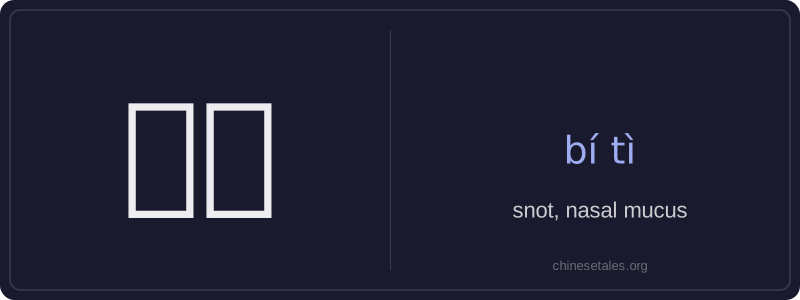
鼻涕 (bí tì) literally combines 鼻 (bí), meaning 'nose', and 涕 (tì), an older literary word for 'tears' or 'mucus'. In modern Chinese, it specifically refers to nasal mucus — what English speakers call 'snot'. It’s a neutral, colloquial noun used in everyday speech, especially when describing colds, allergies, or seasonal congestion. While not vulgar, it’s informal and rarely appears in formal medical contexts (where terms like 鼻分泌物 ní fēnmìwù — 'nasal secretion' — are preferred).
The word is often used with verbs like 流 (liú, 'to flow'), 擦 (cā, 'to wipe'), or 打喷嚏 (dǎ pēntì, 'to sneeze'). It frequently appears in descriptions of illness or childhood behavior — for example, children with runny noses or adults recovering from the flu. Unlike English 'snot', which can be jarring or childish in some registers, 鼻涕 carries no strong stigma but is best avoided in polite or clinical writing.
Example Sentences
Related Words
认同
‘认同’ (tóng rèn) is a verb meaning ‘to ident
面条
‘面条’ (miàn tiáo) literally means ‘flour str
背后
背后 literally means 'back + behind' and functions
认为
‘认为’ (rèn wéi) is a transitive verb meaning
不对
不对 (bù duì) literally combines 不 (bù), meani
中学
'Zhōngxué' literally combines 'zhōng' (middle)
见面
见面 literally means 'see face' — combining 见 (t
外语
‘外语’ literally means ‘outside language’ —