Word Explanation
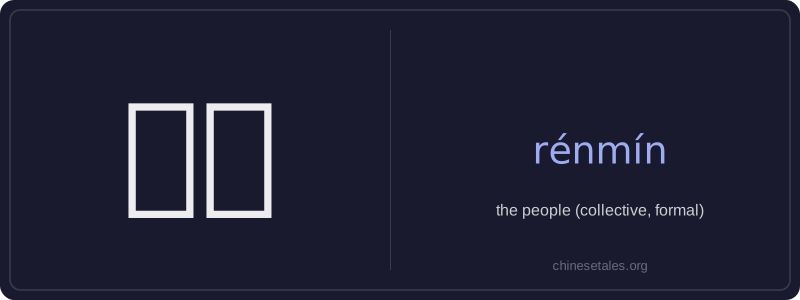
‘Rénmín’ (人民) literally combines ‘rén’ (person, human) and ‘mín’ (people, common folk), forming a formal, collective noun meaning ‘the people’ — not individuals, but the populace as a unified social or political entity. It carries strong institutional and ideological weight, especially in official contexts like government, law, and media.
This term is rarely used in casual speech; instead, it appears in set phrases such as ‘Zhōngguó Rénmín Gònghéguó’ (People’s Republic of China), ‘Rénmín Bì’ (People’s Currency / RMB), or ‘Rénmín Fǎyuàn’ (People’s Court). Unlike the neutral ‘rén’ or colloquial ‘dàjiā’ (everyone), ‘rénmín’ implies legitimacy, sovereignty, and civic identity — often aligned with state discourse or patriotic expression.
Example Sentences
Related Words
认同
‘认同’ (tóng rèn) is a verb meaning ‘to ident
面条
‘面条’ (miàn tiáo) literally means ‘flour str
背后
背后 literally means 'back + behind' and functions
认为
‘认为’ (rèn wéi) is a transitive verb meaning
不对
不对 (bù duì) literally combines 不 (bù), meani
中学
'Zhōngxué' literally combines 'zhōng' (middle)
见面
见面 literally means 'see face' — combining 见 (t
外语
‘外语’ literally means ‘outside language’ —