Word Explanation
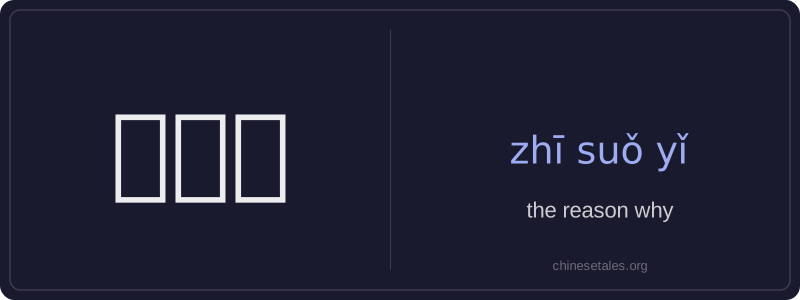
之所以 (zhī suǒ yǐ) is a formal conjunction meaning 'the reason why' or 'the cause for which'. It always appears in a two-part structure: 之所以 + [reason clause], followed by 是因为 (shì yīn wèi) or other causal markers like ‘乃’ or ‘缘于’ — never used alone. The three characters together form an elegant, literary construction: 之 functions as a grammatical particle linking clauses, 所 marks the passive or nominalized verb phrase, and 以 means 'because' or 'by means of'. Together, they emphasize the underlying cause behind an observed result.
This expression is common in written Chinese — essays, news reports, academic writing — and formal speech. It conveys logical explanation with nuance and gravity, often highlighting contrast between appearance and underlying cause. Learners should note that it introduces the *reason* part of a causal pair, not the result; the result comes before it (e.g., 'He succeeded — 之所以 he succeeded...'). Its tone is neutral to serious, rarely used in casual conversation.
Example Sentences
Related Words
认同
‘认同’ (tóng rèn) is a verb meaning ‘to ident
面条
‘面条’ (miàn tiáo) literally means ‘flour str
背后
背后 literally means 'back + behind' and functions
认为
‘认为’ (rèn wéi) is a transitive verb meaning
不对
不对 (bù duì) literally combines 不 (bù), meani
中学
'Zhōngxué' literally combines 'zhōng' (middle)
见面
见面 literally means 'see face' — combining 见 (t
外语
‘外语’ literally means ‘outside language’ —