Word Explanation
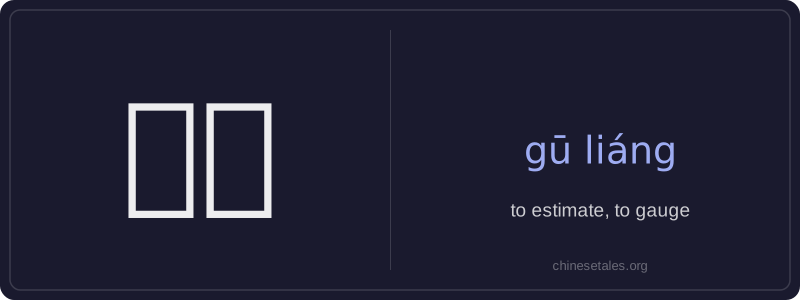
估量 (gū liáng) is a formal, written verb meaning 'to estimate' or 'to gauge'—especially when judging size, quantity, value, time, effort, or difficulty without precise measurement. The first character 估 (gū) means 'to guess' or 'to estimate', and the second 量 (liáng) means 'to measure'. Together, they emphasize an approximate, thoughtful assessment rather than exact calculation. It’s commonly used in academic, professional, or reflective contexts—such as evaluating project scope, judging risks, or assessing someone’s ability.
Unlike colloquial terms like 估计 (gūjì), 估量 carries a slightly more deliberate, analytical nuance and often appears in written reports, speeches, or formal discussions. It frequently follows subjects like 我们, 专家, or 这个问题 and pairs with objects indicating scale or impact (e.g., 成本, 难度, 影响). It does not take aspect particles (了, 过, 着) as readily as 估计, and is rarely used in casual spoken Chinese.
Example Sentences
Related Words
认同
‘认同’ (tóng rèn) is a verb meaning ‘to ident
面条
‘面条’ (miàn tiáo) literally means ‘flour str
背后
背后 literally means 'back + behind' and functions
认为
‘认为’ (rèn wéi) is a transitive verb meaning
不对
不对 (bù duì) literally combines 不 (bù), meani
中学
'Zhōngxué' literally combines 'zhōng' (middle)
见面
见面 literally means 'see face' — combining 见 (t
外语
‘外语’ literally means ‘outside language’ —