Word Explanation
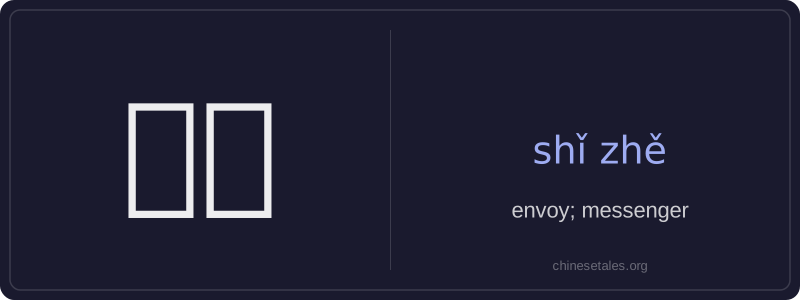
‘使者’ (shǐ zhě) literally combines ‘使’ (shǐ), meaning ‘to send’ or ‘envoy’, and ‘者’ (zhě), a classical suffix meaning ‘person who…’. Together, it denotes a person officially dispatched to represent another party—typically in diplomacy, negotiation, or ceremonial roles. It carries a formal, often historical or literary tone, evoking ancient Chinese envoys sent between states or modern diplomatic representatives.
Unlike the more neutral ‘messenger’ (信使 xìn shǐ) or colloquial ‘delivery person’ (快递员 kuài dì yuán), ‘使者’ emphasizes authority, mission, and symbolic function. It appears frequently in historical texts, news reports about international relations, and metaphorical expressions (e.g., ‘和平的使者’ — ‘messenger of peace’). While rarely used in casual speech, it remains vital for understanding formal writing and official discourse.
Example Sentences
Related Words
认同
‘认同’ (tóng rèn) is a verb meaning ‘to ident
面条
‘面条’ (miàn tiáo) literally means ‘flour str
背后
背后 literally means 'back + behind' and functions
认为
‘认为’ (rèn wéi) is a transitive verb meaning
不对
不对 (bù duì) literally combines 不 (bù), meani
中学
'Zhōngxué' literally combines 'zhōng' (middle)
见面
见面 literally means 'see face' — combining 见 (t
外语
‘外语’ literally means ‘outside language’ —