Word Explanation
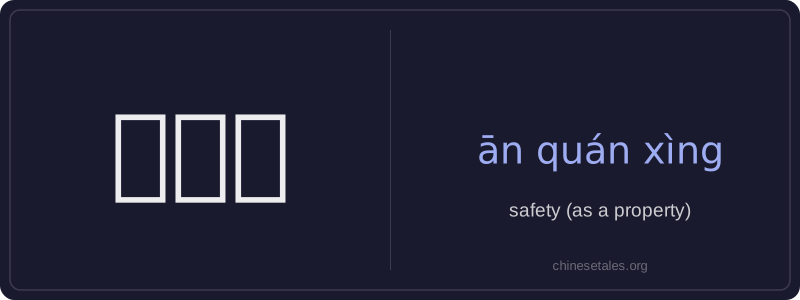
‘安全性’ (ān quán xìng) is a noun meaning ‘safety’ as an inherent property or characteristic — not the state of being safe, but rather the degree or quality of being safe. It combines 安 (ān, ‘peace, safety’), 全 (quán, ‘complete, whole, unharmed’), and 性 (xìng, a nominalizing suffix meaning ‘-ness’ or ‘-ity’). Together, they form a technical, abstract noun commonly used in formal, scientific, or regulatory contexts.
This word appears frequently when evaluating products, procedures, or systems — especially in medicine, engineering, food production, and digital technology. For example, doctors discuss the ‘安全性’ of a new drug, engineers assess the ‘安全性’ of a bridge design, and app developers test the ‘安全性’ of user data handling. Unlike the simpler word 安全 (ān quán), which can function as both noun and adjective, 安全性 always refers to the measurable or evaluative aspect of safety — often requiring evidence, testing, or expert judgment.
Example Sentences
Related Words
认同
‘认同’ (tóng rèn) is a verb meaning ‘to ident
面条
‘面条’ (miàn tiáo) literally means ‘flour str
背后
背后 literally means 'back + behind' and functions
认为
‘认为’ (rèn wéi) is a transitive verb meaning
不对
不对 (bù duì) literally combines 不 (bù), meani
中学
'Zhōngxué' literally combines 'zhōng' (middle)
见面
见面 literally means 'see face' — combining 见 (t
外语
‘外语’ literally means ‘outside language’ —