Word Explanation
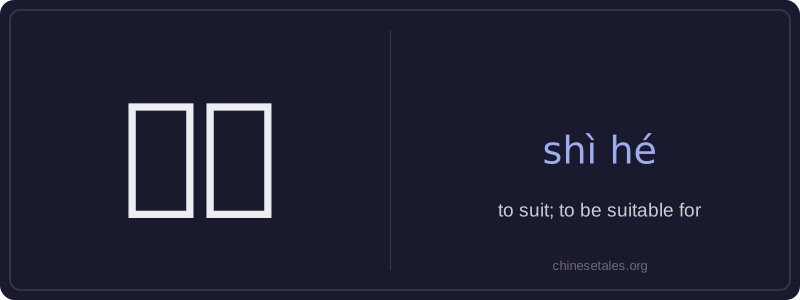
适合 (shì hé) is a verb meaning 'to suit' or 'to be suitable for'. It describes a match between a person, thing, or situation and a particular requirement, condition, or context. The first character 适 (shì) conveys 'appropriate' or 'fitting', while 合 (hé) means 'to match' or 'to conform to' — together, they emphasize mutual compatibility. Unlike single-character verbs, 适合 always requires a subject and an object (often introduced by the particle 对 or followed directly by a noun or clause), and it’s commonly used in evaluations of fitness, preference, or appropriateness.
This word appears frequently in everyday speech and writing — from choosing clothes or careers to recommending products or activities. It carries a neutral-to-positive tone and is appropriate in both casual and formal registers. Note that 适合 is not used attributively before a noun without modification (e.g., you can’t say *适合衣服); instead, use 的 (e.g., 适合我的衣服) or restructure with 是…的 or 很适合.
Example Sentences
Related Words
认同
‘认同’ (tóng rèn) is a verb meaning ‘to ident
面条
‘面条’ (miàn tiáo) literally means ‘flour str
背后
背后 literally means 'back + behind' and functions
认为
‘认为’ (rèn wéi) is a transitive verb meaning
不对
不对 (bù duì) literally combines 不 (bù), meani
中学
'Zhōngxué' literally combines 'zhōng' (middle)
见面
见面 literally means 'see face' — combining 见 (t
外语
‘外语’ literally means ‘outside language’ —