Word Explanation
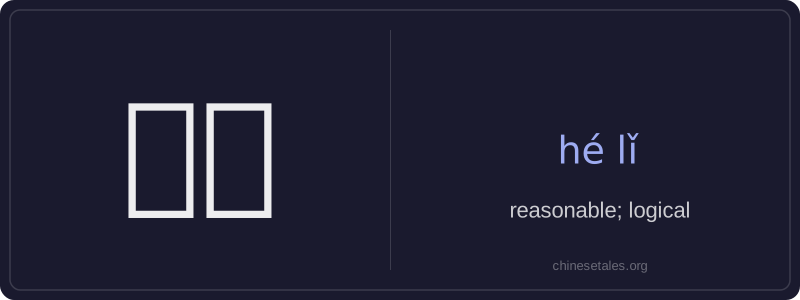
合理 (hé lǐ) is an adjective meaning 'reasonable' or 'logical'—describing something that makes sense based on facts, fairness, or common sense. The first character 合 (hé) means 'to fit together' or 'in accordance with', while 理 (lǐ) means 'principle', 'reason', or 'logic'. Together, they convey the idea of 'conforming to reason' or 'being in line with rational principles'.
This word is commonly used in everyday contexts involving judgment, decisions, expectations, and arrangements—such as schedules, prices, rules, or behavior. It often appears in formal and semi-formal speech and writing, and frequently modifies nouns (e.g., 合理的建议 — 'a reasonable suggestion') or follows verbs like 是 or 显得 ('seems'). Unlike colloquial terms like 有道理, 合理 carries a slightly more objective, principled connotation—implying alignment with logic or fairness rather than mere personal agreement.
Example Sentences
Related Words
认同
‘认同’ (tóng rèn) is a verb meaning ‘to ident
面条
‘面条’ (miàn tiáo) literally means ‘flour str
背后
背后 literally means 'back + behind' and functions
认为
‘认为’ (rèn wéi) is a transitive verb meaning
不对
不对 (bù duì) literally combines 不 (bù), meani
中学
'Zhōngxué' literally combines 'zhōng' (middle)
见面
见面 literally means 'see face' — combining 见 (t
外语
‘外语’ literally means ‘outside language’ —