Word Explanation
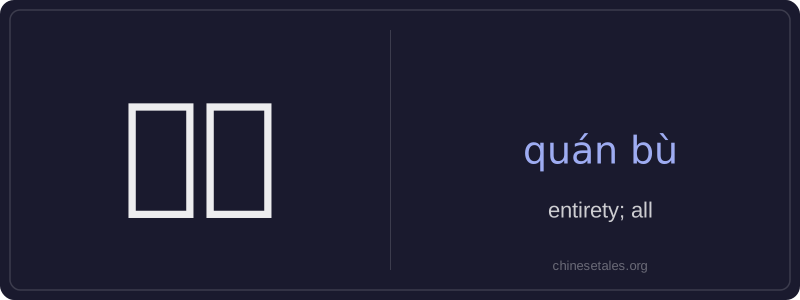
全部 (quán bù) means 'entirety', 'all', or 'the whole' — it emphasizes completeness and totality. The character 全 (quán) means 'whole' or 'complete', while 部 (bù) originally meant 'part' or 'section' but in this compound functions as a nominalizer, turning the idea of wholeness into a countable or referential noun/adjective. Together, they form a word that can modify nouns ('all the books'), serve as a subject or object ('I ate all'), or stand alone ('Give me all'). It’s more formal and emphatic than simpler alternatives like 都 (dōu) or 所有 (suǒ yǒu), and commonly appears in written Chinese, instructions, announcements, and careful speech.
全部 is often used with measure words (e.g., 全部的书, quán bù de shū — 'all the books') or without them when referring to an understood set (e.g., 把这些全部拿走 — 'take all of these away'). It carries a sense of finality and inclusiveness — nothing is excluded. While it can appear in casual speech, it’s especially frequent in contexts requiring precision: logistics, data reporting, household tasks, and classroom instructions.
Example Sentences
Related Words
认同
‘认同’ (tóng rèn) is a verb meaning ‘to ident
面条
‘面条’ (miàn tiáo) literally means ‘flour str
背后
背后 literally means 'back + behind' and functions
认为
‘认为’ (rèn wéi) is a transitive verb meaning
不对
不对 (bù duì) literally combines 不 (bù), meani
中学
'Zhōngxué' literally combines 'zhōng' (middle)
见面
见面 literally means 'see face' — combining 见 (t
外语
‘外语’ literally means ‘outside language’ —