Word Explanation
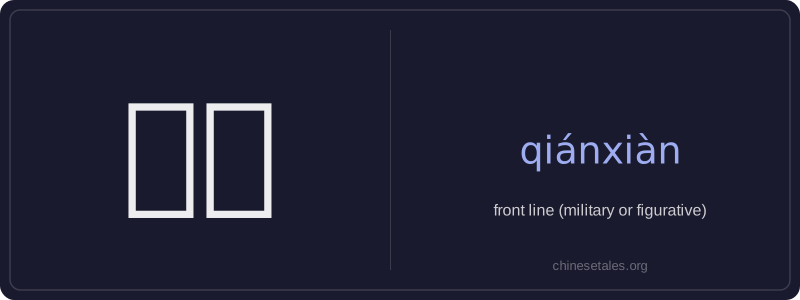
'前线' literally combines '前' (qián), meaning 'front' or 'forward', and '线' (xiàn), meaning 'line'. Together, it denotes the forwardmost position in a conflict zone — the military front line — where combat occurs. Historically rooted in warfare, the term carries strong connotations of danger, urgency, and direct engagement.
Figuratively, '前线' extends to any critical, high-stakes environment demanding immediate action: medical workers on the 'epidemic frontline', scientists at the 'research frontline', or teachers on the 'education frontline'. It emphasizes proximity to the core challenge and active involvement rather than observation or support roles. The word is formal and evocative, rarely used in casual daily speech but common in news reports, official statements, and motivational contexts.
Example Sentences
Related Words
认同
‘认同’ (tóng rèn) is a verb meaning ‘to ident
面条
‘面条’ (miàn tiáo) literally means ‘flour str
背后
背后 literally means 'back + behind' and functions
认为
‘认为’ (rèn wéi) is a transitive verb meaning
不对
不对 (bù duì) literally combines 不 (bù), meani
中学
'Zhōngxué' literally combines 'zhōng' (middle)
见面
见面 literally means 'see face' — combining 见 (t
外语
‘外语’ literally means ‘outside language’ —