Word Explanation
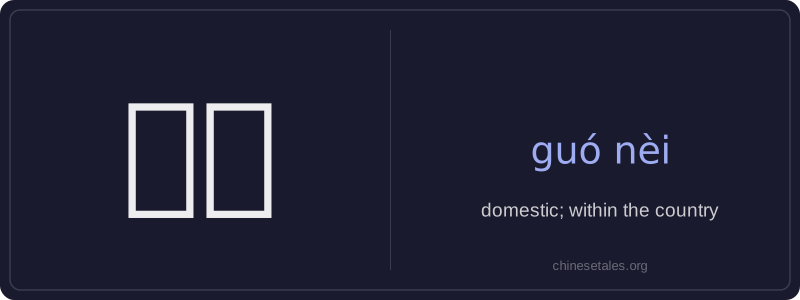
‘国内’ literally means ‘within the country’ — ‘国’ (guó) means ‘country’ or ‘nation’, and ‘内’ (nèi) means ‘inside’ or ‘within’. Together, they form a compound that refers to anything located, occurring, or operating inside China’s national borders. It functions as both a noun (e.g., ‘the domestic market’) and an adjective (e.g., ‘domestic flights’), often modifying nouns like 市场 (market), 航班 (flights), or 新闻 (news).
This term is widely used in formal, media, business, and everyday contexts to distinguish local/internal matters from international or overseas ones. It carries a neutral, factual tone — not emotional or evaluative — and is commonly paired with words indicating scope, scale, or origin. Unlike colloquial alternatives like 本地 (local), 国内 emphasizes national-level boundaries rather than city- or province-level ones.
Example Sentences
Related Words
认同
‘认同’ (tóng rèn) is a verb meaning ‘to ident
面条
‘面条’ (miàn tiáo) literally means ‘flour str
背后
背后 literally means 'back + behind' and functions
认为
‘认为’ (rèn wéi) is a transitive verb meaning
不对
不对 (bù duì) literally combines 不 (bù), meani
中学
'Zhōngxué' literally combines 'zhōng' (middle)
见面
见面 literally means 'see face' — combining 见 (t
外语
‘外语’ literally means ‘outside language’ —