Word Explanation
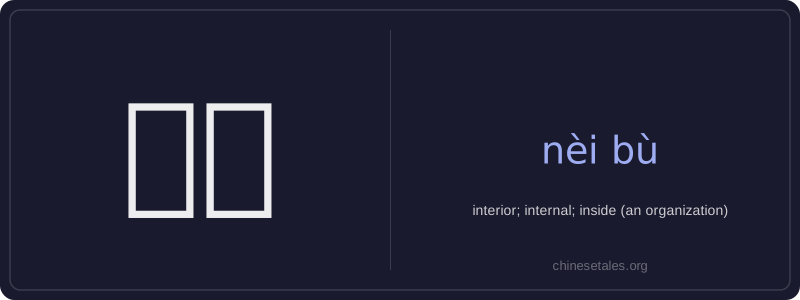
内部 (nèi bù) literally combines 内 (nèi), meaning 'inside' or 'within,' and 部 (bù), meaning 'part,' 'section,' or 'department.' Together, it refers to the interior space of something physical—like a building or machine—or, more commonly, the inner workings or personnel of an organization, institution, or system. It emphasizes what exists 'within the boundaries' rather than on the surface or externally.
This word is frequently used in formal, administrative, or business contexts—for example, when discussing internal policies, internal communication, or internal affairs. Unlike the more general word 里面 (lǐmiàn), which simply means 'inside' (e.g., inside a box), 内部 carries a sense of structural or organizational containment and often implies confidentiality or restricted access. It can function as both a noun ('the internal part') and an attributive adjective ('internal matters').
Example Sentences
Related Words
认同
‘认同’ (tóng rèn) is a verb meaning ‘to ident
面条
‘面条’ (miàn tiáo) literally means ‘flour str
背后
背后 literally means 'back + behind' and functions
认为
‘认为’ (rèn wéi) is a transitive verb meaning
不对
不对 (bù duì) literally combines 不 (bù), meani
中学
'Zhōngxué' literally combines 'zhōng' (middle)
见面
见面 literally means 'see face' — combining 见 (t
外语
‘外语’ literally means ‘outside language’ —