Word Explanation
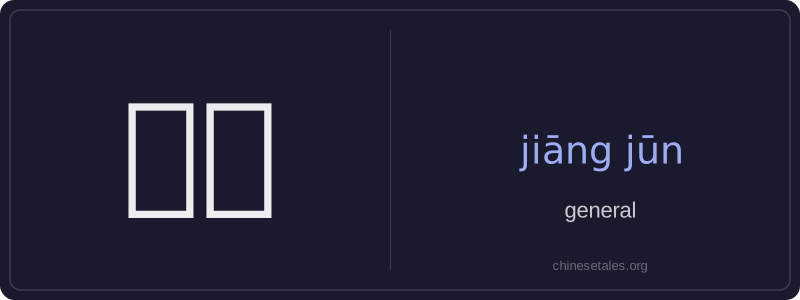
‘将军’ (jiāng jūn) literally combines ‘将’ (jiāng), meaning ‘commander’ or ‘to lead’, and ‘军’ (jūn), meaning ‘army’ or ‘military’. Together, they form the standard term for a high-ranking military officer—equivalent to ‘general’ in English. Historically, it denoted top-tier commanders in imperial China’s armed forces, and today it remains the formal title for senior officers in modern Chinese-speaking militaries (e.g., PLA generals). The word carries strong connotations of authority, strategy, and leadership.
Beyond its military use, ‘将军’ appears in historical dramas, literature, and idioms (e.g., 纸上谈兵, ‘armchair general’). It is also used respectfully when addressing or referring to retired generals, and occasionally as an honorific in ceremonial or commemorative contexts. Unlike English ‘general’, it is rarely used metaphorically in casual speech (e.g., you wouldn’t call a project leader a ‘general’ without irony or specific stylistic intent).
Example Sentences
Related Words
认同
‘认同’ (tóng rèn) is a verb meaning ‘to ident
面条
‘面条’ (miàn tiáo) literally means ‘flour str
背后
背后 literally means 'back + behind' and functions
认为
‘认为’ (rèn wéi) is a transitive verb meaning
不对
不对 (bù duì) literally combines 不 (bù), meani
中学
'Zhōngxué' literally combines 'zhōng' (middle)
见面
见面 literally means 'see face' — combining 见 (t
外语
‘外语’ literally means ‘outside language’ —