Word Explanation
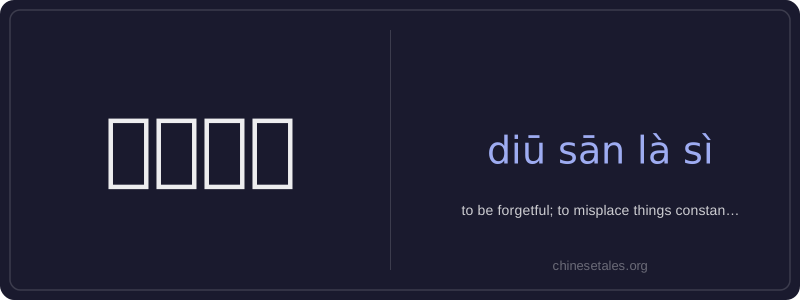
'Diū sān là sì' literally means 'to lose three and drop four'—a vivid idiom evoking the image of someone so scatterbrained they misplace or forget multiple items at once. The characters 丢 (diū, 'to lose') and 落 (là, 'to drop/fail to do') both convey loss or omission, while 三 (sān) and 四 (sì) are generic numbers used idiomatically to mean 'several' or 'many', not literal counts. This phrase emphasizes habitual, almost comical forgetfulness—not occasional absentmindedness, but a consistent pattern of losing keys, forgetting appointments, or leaving belongings behind.
It's commonly used in informal spoken Chinese to gently tease or self-deprecatingly describe disorganization. Though it sounds numerical, it’s purely figurative and never used with actual numbers in context. Native speakers often pair it with verbs like 是 (shì), 变得 (biàn de), or 有点儿 (yǒu diǎnr) to describe a person’s tendency or current state.
Example Sentences
Related Words
认同
‘认同’ (tóng rèn) is a verb meaning ‘to ident
面条
‘面条’ (miàn tiáo) literally means ‘flour str
背后
背后 literally means 'back + behind' and functions
认为
‘认为’ (rèn wéi) is a transitive verb meaning
不对
不对 (bù duì) literally combines 不 (bù), meani
中学
'Zhōngxué' literally combines 'zhōng' (middle)
见面
见面 literally means 'see face' — combining 见 (t
外语
‘外语’ literally means ‘outside language’ —