Word Explanation
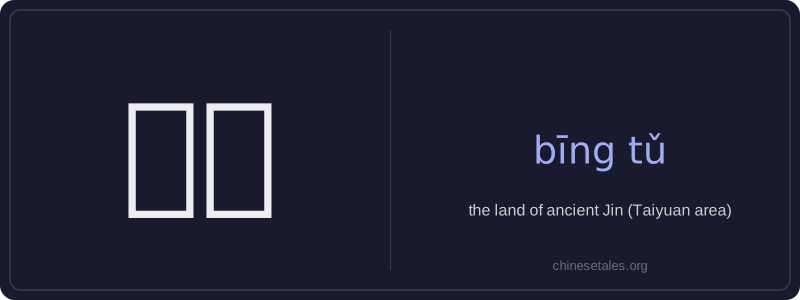
‘并土’ (bīng tǔ) is a classical literary term referring specifically to the ancient region of Jin, centered on present-day Taiyuan in Shanxi Province. The character ‘并’ here is an archaic name for Jin—derived from the ancient state of Jin and later used as a shorthand for its territory—while ‘土’ means ‘land’ or ‘soil’. Together, they form a poetic, historical compound meaning ‘the land of Jin’, often appearing in classical poetry, historical texts, and regional cultural references.
This term carries strong connotations of heritage, geography, and cultural identity. It is not used in modern daily speech but appears in formal writing, academic discussions of Chinese history, or regional pride contexts—especially in Shanxi. Unlike common place names like ‘山西’ (Shānxī), ‘并土’ evokes antiquity and literati tradition, and is sometimes paired with terms like ‘并州’ (bīng zhōu), another classical name for the same area.
Example Sentences
Related Words
认同
‘认同’ (tóng rèn) is a verb meaning ‘to ident
面条
‘面条’ (miàn tiáo) literally means ‘flour str
背后
背后 literally means 'back + behind' and functions
认为
‘认为’ (rèn wéi) is a transitive verb meaning
不对
不对 (bù duì) literally combines 不 (bù), meani
中学
'Zhōngxué' literally combines 'zhōng' (middle)
见面
见面 literally means 'see face' — combining 见 (t
外语
‘外语’ literally means ‘outside language’ —