Word Explanation
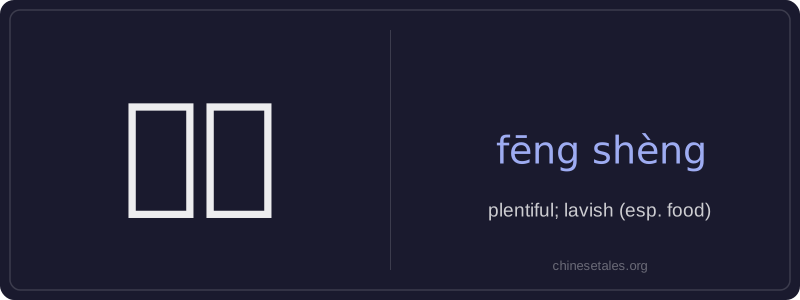
'丰盛' (fēng shèng) is an adjective meaning 'plentiful' or 'lavish', especially describing an abundance of food—think of a festive banquet with many dishes, generous portions, and rich variety. The first character 丰 (fēng) means 'abundant' or 'bountiful', often associated with harvests and prosperity; the second character 盛 (shèng) means 'flourishing', 'thriving', or 'grand'. Together, they intensify each other to convey opulence and fullness, particularly in culinary contexts.
This word is commonly used for meals—breakfast, banquets, holiday feasts—or figuratively for abundant resources (e.g., natural resources), though food remains its dominant domain. It carries a positive, warm connotation, suggesting generosity, celebration, and satisfaction. Unlike neutral terms like 'many' or 'a lot', 丰盛 implies quality as well as quantity: the food is not just plentiful but also varied, high-quality, and thoughtfully prepared.
Example Sentences
Related Words
认同
‘认同’ (tóng rèn) is a verb meaning ‘to ident
面条
‘面条’ (miàn tiáo) literally means ‘flour str
背后
背后 literally means 'back + behind' and functions
认为
‘认为’ (rèn wéi) is a transitive verb meaning
不对
不对 (bù duì) literally combines 不 (bù), meani
中学
'Zhōngxué' literally combines 'zhōng' (middle)
见面
见面 literally means 'see face' — combining 见 (t
外语
‘外语’ literally means ‘outside language’ —