Word Explanation
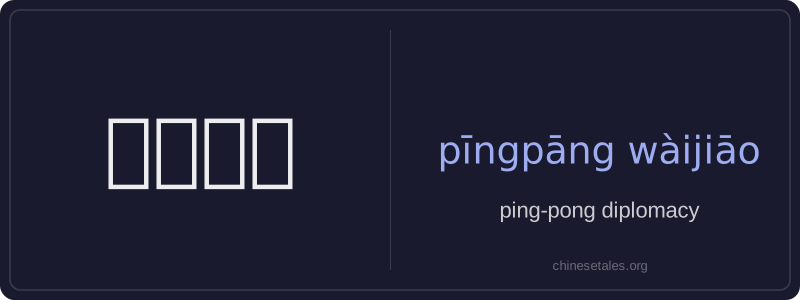
'Ping-pong diplomacy' refers to the historic use of table tennis exchanges between China and the United States in the early 1970s to ease political tensions and pave the way for diplomatic normalization. The term combines 乒乓 (pīngpāng), the onomatopoeic name for table tennis, and 外交 (wàijiāo), meaning 'diplomacy' or 'foreign relations'. Though literally 'ping-pong + diplomacy', it functions as a fixed noun describing a specific historical strategy where sports served as a soft-power tool for international engagement.
This term is almost exclusively used in historical, political, or academic contexts to evoke that pivotal moment—especially the 1971 U.S. table tennis team’s visit to China, followed by Kissinger’s secret trip and Nixon’s 1972 visit. It is not used for general sports diplomacy today, nor does it refer to casual or recreational table tennis. The phrase carries strong connotations of breakthrough, symbolism, and non-military bridge-building between nations.
Example Sentences
Related Words
认同
‘认同’ (tóng rèn) is a verb meaning ‘to ident
面条
‘面条’ (miàn tiáo) literally means ‘flour str
背后
背后 literally means 'back + behind' and functions
认为
‘认为’ (rèn wéi) is a transitive verb meaning
不对
不对 (bù duì) literally combines 不 (bù), meani
中学
'Zhōngxué' literally combines 'zhōng' (middle)
见面
见面 literally means 'see face' — combining 见 (t
外语
‘外语’ literally means ‘outside language’ —