Word Explanation
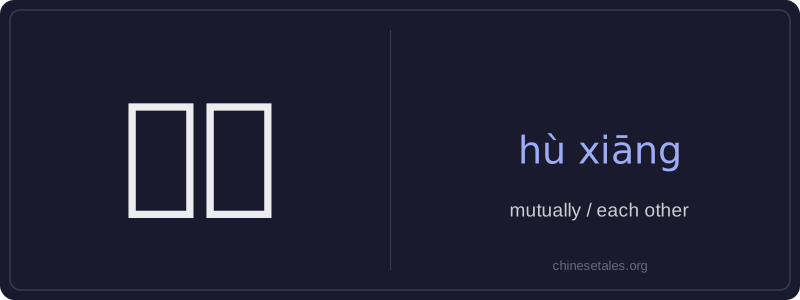
‘互相’ is an adverb meaning ‘mutually’ or ‘each other,’ indicating reciprocal action or relationship between two or more parties. The character 互 (hù) means ‘mutual’ or ‘reciprocal,’ while 相 (xiāng) often implies ‘together,’ ‘in relation to one another,’ or ‘each other.’ Combined, they emphasize a two-way or shared dynamic — neither party acts alone; both participate equally in the action or state.
This word commonly appears before verbs (e.g., 互相帮助, 互相理解) and is frequently used in everyday contexts involving cooperation, communication, emotion, or social interaction — such as friendships, teamwork, learning, or conflict resolution. It’s neutral in register and appropriate in both spoken and written Chinese, though it’s slightly more formal than the colloquial ‘彼此.’ Unlike pronouns, ‘互相’ cannot serve as a subject or object; it only modifies verbs or adjectives, always requiring a following verb or adjective to complete its meaning.
Example Sentences
Related Words
认同
‘认同’ (tóng rèn) is a verb meaning ‘to ident
面条
‘面条’ (miàn tiáo) literally means ‘flour str
背后
背后 literally means 'back + behind' and functions
认为
‘认为’ (rèn wéi) is a transitive verb meaning
不对
不对 (bù duì) literally combines 不 (bù), meani
中学
'Zhōngxué' literally combines 'zhōng' (middle)
见面
见面 literally means 'see face' — combining 见 (t
外语
‘外语’ literally means ‘outside language’ —