Word Explanation
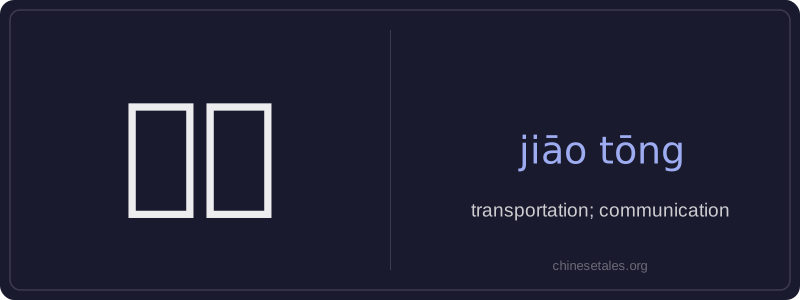
交通 (jiāo tōng) literally combines 交 (jiāo), meaning 'to connect, to intersect', and 通 (tōng), meaning 'to pass through, to be unobstructed'. Together, they express the idea of movement and exchange—whether of people, goods, or information—across space. In modern usage, it most commonly refers to transportation systems: roads, buses, subways, trains, and traffic flow.
It can also mean 'communication' in formal or technical contexts, especially when discussing historical or technological infrastructure (e.g., ancient trade routes or data networks). However, for everyday communication (like talking or messaging), words like 沟通 (gōu tōng) or 交流 (jiāo liú) are far more natural. 交通 is frequently used in compound nouns such as 交通规则 (traffic rules), 交通事故 (traffic accident), and 交通拥堵 (traffic congestion).
Example Sentences
Related Words
认同
‘认同’ (tóng rèn) is a verb meaning ‘to ident
面条
‘面条’ (miàn tiáo) literally means ‘flour str
背后
背后 literally means 'back + behind' and functions
认为
‘认为’ (rèn wéi) is a transitive verb meaning
不对
不对 (bù duì) literally combines 不 (bù), meani
中学
'Zhōngxué' literally combines 'zhōng' (middle)
见面
见面 literally means 'see face' — combining 见 (t
外语
‘外语’ literally means ‘outside language’ —