Word Explanation
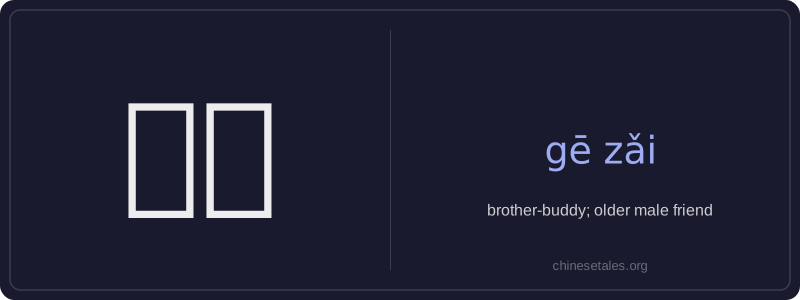
哥仔 (gē zǎi) is an informal, affectionate term used primarily in Southern Chinese dialects—especially Cantonese—and increasingly in colloquial Mandarin—to refer to an older male friend or a close, easygoing brother-like figure. Though 哥 (gē) literally means 'older brother' and 仔 (zǎi) often conveys youthfulness or familiarity (as in 小仔 'little guy'), together they soften hierarchy and emphasize camaraderie rather than blood relation. It’s not used for actual siblings in formal contexts, nor for significantly older men—it carries a warm, playful, slightly youthful vibe.
The term reflects the importance of relational warmth and informal kinship in Chinese social interaction. It’s common among peers in their twenties and thirties, especially in casual settings like hanging out, traveling, or team activities. While originally Cantonese, it’s now widely understood in mainland urban youth speech, though still marked as friendly and non-official. Avoid using it with superiors or elders unless invited into that level of familiarity.
Example Sentences
Related Words
认同
‘认同’ (tóng rèn) is a verb meaning ‘to ident
面条
‘面条’ (miàn tiáo) literally means ‘flour str
背后
背后 literally means 'back + behind' and functions
认为
‘认为’ (rèn wéi) is a transitive verb meaning
不对
不对 (bù duì) literally combines 不 (bù), meani
中学
'Zhōngxué' literally combines 'zhōng' (middle)
见面
见面 literally means 'see face' — combining 见 (t
外语
‘外语’ literally means ‘outside language’ —