Word Explanation
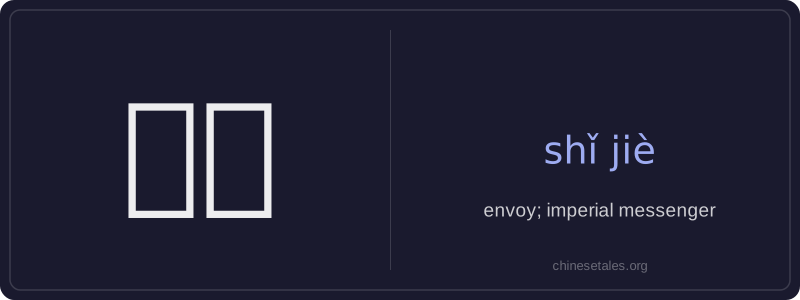
‘使价’ (shǐ jiè) is a classical Chinese term meaning 'envoy' or 'imperial messenger' — a person officially dispatched by a ruler or government to represent authority, deliver decrees, negotiate treaties, or inspect regional affairs. The character 使 (shǐ) means 'to send' or 'messenger', and 价 (jiè) here is an archaic variant of 介 (jiè), meaning 'intermediary' or 'go-between'. Together, they emphasize the role of a trusted intermediary acting on behalf of higher authority.
This term appears almost exclusively in historical texts, classical literature, and formal historical discourse — not in modern spoken or written Mandarin. It evokes imperial China’s bureaucratic and diplomatic systems, especially during dynasties like Han, Tang, or Ming. While rare today, it may surface in academic writing, historical dramas, or museum exhibits describing ancient envoys sent to tributary states or frontier regions.
Example Sentences
Related Words
认同
‘认同’ (tóng rèn) is a verb meaning ‘to ident
面条
‘面条’ (miàn tiáo) literally means ‘flour str
背后
背后 literally means 'back + behind' and functions
认为
‘认为’ (rèn wéi) is a transitive verb meaning
不对
不对 (bù duì) literally combines 不 (bù), meani
中学
'Zhōngxué' literally combines 'zhōng' (middle)
见面
见面 literally means 'see face' — combining 见 (t
外语
‘外语’ literally means ‘outside language’ —