Word Explanation
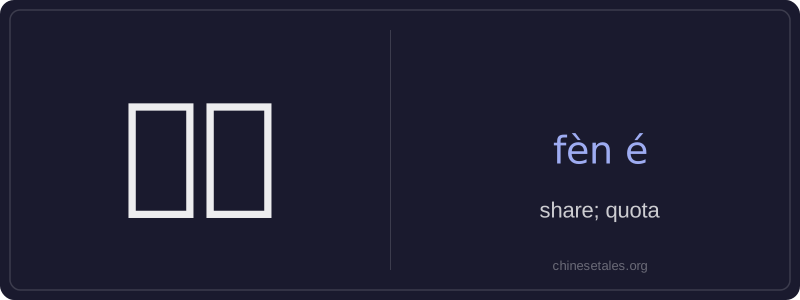
份额 (fèn é) is a noun meaning 'share' or 'quota'—a specific portion of a whole, often expressed numerically or proportionally. The first character 份 (fèn) means 'portion', 'share', or 'part', and commonly appears in words like 一份 (yī fèn, 'one portion') or 分份 (fēn fèn, 'to divide into portions'). The second character 额 (é) originally meant 'forehead', but in modern usage it carries the sense of 'quota', 'limit', or 'allocated amount', as in 额度 (é dù, 'quota' or 'limit'). Together, 份额 emphasizes a formally assigned or quantifiable share within a larger total—commonly used in business, economics, statistics, and policy contexts.
This word is frequently paired with measure words like '所占' (suǒ zhàn, 'accounting for'), '比例' (bǐlì, 'proportion'), or numbers (e.g., '10%的份额'). It implies formality and objectivity—not casual division, but an official, calculated, or institutional allocation. You’ll see it in discussions about market share, budget allocations, voting rights, or resource distribution.
Example Sentences
Related Words
认同
‘认同’ (tóng rèn) is a verb meaning ‘to ident
面条
‘面条’ (miàn tiáo) literally means ‘flour str
背后
背后 literally means 'back + behind' and functions
认为
‘认为’ (rèn wéi) is a transitive verb meaning
不对
不对 (bù duì) literally combines 不 (bù), meani
中学
'Zhōngxué' literally combines 'zhōng' (middle)
见面
见面 literally means 'see face' — combining 见 (t
外语
‘外语’ literally means ‘outside language’ —