Word Explanation
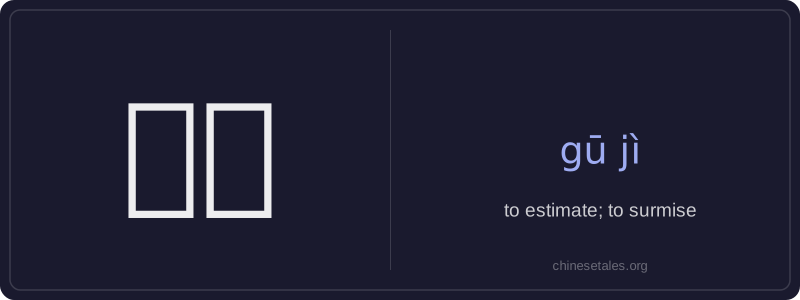
估计 (gū jì) is a verb meaning 'to estimate' or 'to surmise' — to form an approximate judgment or educated guess about quantity, time, cost, probability, or outcome, often based on limited information. The character 估 (gū) means 'to appraise' or 'to assess,' while 计 (jì) means 'to calculate' or 'to plan.' Together, they emphasize reasoned approximation rather than precise measurement.
This word is widely used in daily conversation, news reports, scientific discussions, and planning contexts — for example, estimating travel time, project costs, population growth, or the likelihood of rain. It can appear at the beginning or middle of a sentence, often followed by a clause (e.g., 估计他明天会来) or a noun phrase with measure words (e.g., 估计三小时). While neutral in register, it’s more formal than colloquial alternatives like 猜 (to guess), and implies some basis for the judgment — not just random speculation.
Example Sentences
Related Words
认同
‘认同’ (tóng rèn) is a verb meaning ‘to ident
面条
‘面条’ (miàn tiáo) literally means ‘flour str
背后
背后 literally means 'back + behind' and functions
认为
‘认为’ (rèn wéi) is a transitive verb meaning
不对
不对 (bù duì) literally combines 不 (bù), meani
中学
'Zhōngxué' literally combines 'zhōng' (middle)
见面
见面 literally means 'see face' — combining 见 (t
外语
‘外语’ literally means ‘outside language’ —