Word Explanation
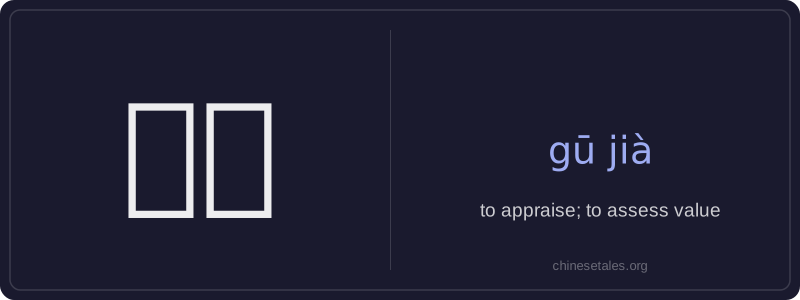
‘估价’ is a verb meaning ‘to appraise’ or ‘to assess the monetary value’ of something—typically property, goods, artwork, or real estate. The first character 估 (gū) means ‘to estimate’ or ‘to guess based on experience,’ while 价 (jià) means ‘price’ or ‘value.’ Together, they form a compound verb that emphasizes professional or informed judgment about worth, not casual guessing. It’s commonly used in business, finance, insurance, and real estate contexts.
This word implies a formal or semi-formal evaluation process, often conducted by experts such as appraisers, auctioneers, or valuation consultants. Unlike the more general 估计 (gūjì, ‘to estimate’), 估价 specifically concerns financial or market value and usually results in a stated figure. It can be used transitively (e.g., 估价一套房产) or in passive constructions (e.g., 这幅画已被估价). While it may appear in written reports or official documents, it’s also common in everyday conversations about buying or selling valuable items.
Example Sentences
Related Words
认同
‘认同’ (tóng rèn) is a verb meaning ‘to ident
面条
‘面条’ (miàn tiáo) literally means ‘flour str
背后
背后 literally means 'back + behind' and functions
认为
‘认为’ (rèn wéi) is a transitive verb meaning
不对
不对 (bù duì) literally combines 不 (bù), meani
中学
'Zhōngxué' literally combines 'zhōng' (middle)
见面
见面 literally means 'see face' — combining 见 (t
外语
‘外语’ literally means ‘outside language’ —