Word Explanation
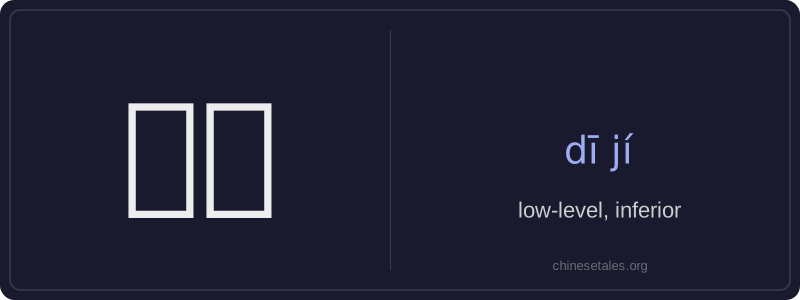
‘低级’ literally combines ‘低’ (dī), meaning ‘low’, and ‘级’ (jí), meaning ‘level’ or ‘grade’. Together, it describes something of low rank, poor quality, or lacking sophistication—often implying a lack of refinement, moral standing, or technical competence. It’s commonly used to criticize behavior, language, products, or content perceived as crude, vulgar, or unsophisticated.
The term carries a strong evaluative and sometimes judgmental tone, especially in formal or educational contexts. While it can describe objectively basic things (e.g., ‘low-level programming’), in everyday speech it’s more frequently used subjectively to express disapproval—such as calling jokes, arguments, or online comments ‘低级’. It’s rarely neutral; context and intonation heavily influence whether the criticism feels mild or severe.
Example Sentences
Related Words
认同
‘认同’ (tóng rèn) is a verb meaning ‘to ident
面条
‘面条’ (miàn tiáo) literally means ‘flour str
背后
背后 literally means 'back + behind' and functions
认为
‘认为’ (rèn wéi) is a transitive verb meaning
不对
不对 (bù duì) literally combines 不 (bù), meani
中学
'Zhōngxué' literally combines 'zhōng' (middle)
见面
见面 literally means 'see face' — combining 见 (t
外语
‘外语’ literally means ‘outside language’ —