Word Explanation
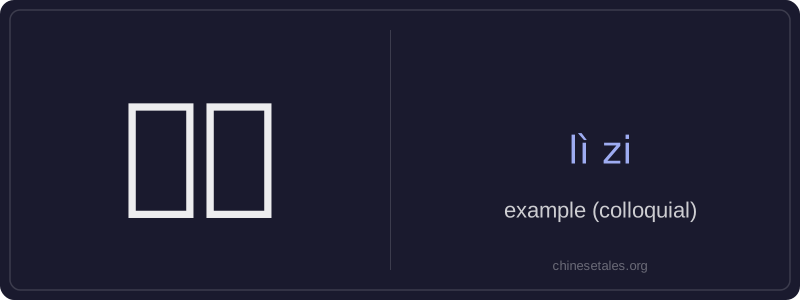
‘例子’ (lì zi) is a colloquial noun meaning 'example' — something concrete used to illustrate or clarify a concept, rule, or situation. The first character 例 (lì) means 'precedent', 'case', or 'instance', while 子 (zi) is a common nominal suffix that adds a light, informal, or diminutive nuance — similar to how ‘-let’ or ‘-ling’ works in English. Together, they form a friendly, everyday word for 'example', especially in speech and informal writing.
This term appears frequently in explanations, teaching, and casual conversation — for instance, when giving illustrations of grammar usage, behavior norms, or problem-solving approaches. Unlike the more formal synonym 例证 (lìzhèng) or 事例 (shìlì), 例子 carries warmth and accessibility. It’s often preceded by measure words like 一 (yī) or 这个 (zhège), and rarely stands alone without modification.
Example Sentences
Related Words
认同
‘认同’ (tóng rèn) is a verb meaning ‘to ident
面条
‘面条’ (miàn tiáo) literally means ‘flour str
背后
背后 literally means 'back + behind' and functions
认为
‘认为’ (rèn wéi) is a transitive verb meaning
不对
不对 (bù duì) literally combines 不 (bù), meani
中学
'Zhōngxué' literally combines 'zhōng' (middle)
见面
见面 literally means 'see face' — combining 见 (t
外语
‘外语’ literally means ‘outside language’ —