Word Explanation
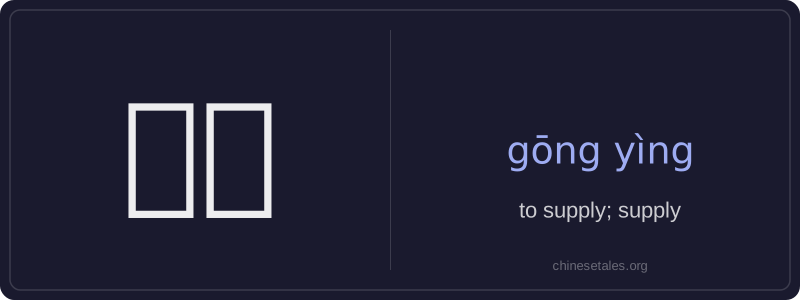
‘供应’ (gōng yìng) is a verb meaning ‘to supply’ or ‘to provide’, especially in formal, institutional, or large-scale contexts — such as government services, business operations, or ecological systems. The first character 供 (gōng) means ‘to offer’ or ‘to provide’, often with connotations of meeting a need; the second character 应 (yìng) means ‘to respond’ or ‘to meet (a demand)’. Together, they emphasize fulfilling a requirement reliably and systematically — not just a one-time act, but an ongoing, organized provision.
This word frequently appears in discussions about resources, infrastructure, and sustainability: for example, food supply chains, medical supplies during emergencies, or ecological balance where predators and prey ‘supply’ each other’s population control. It is commonly used in written Chinese and formal speech, and often pairs with nouns like ‘food’, ‘water’, ‘electricity’, or ‘medical equipment’. Unlike the more casual ‘提供’ (tígōng), ‘供应’ implies scale, consistency, and functional necessity.
Example Sentences
Related Words
认同
‘认同’ (tóng rèn) is a verb meaning ‘to ident
面条
‘面条’ (miàn tiáo) literally means ‘flour str
背后
背后 literally means 'back + behind' and functions
认为
‘认为’ (rèn wéi) is a transitive verb meaning
不对
不对 (bù duì) literally combines 不 (bù), meani
中学
'Zhōngxué' literally combines 'zhōng' (middle)
见面
见面 literally means 'see face' — combining 见 (t
外语
‘外语’ literally means ‘outside language’ —