Word Explanation
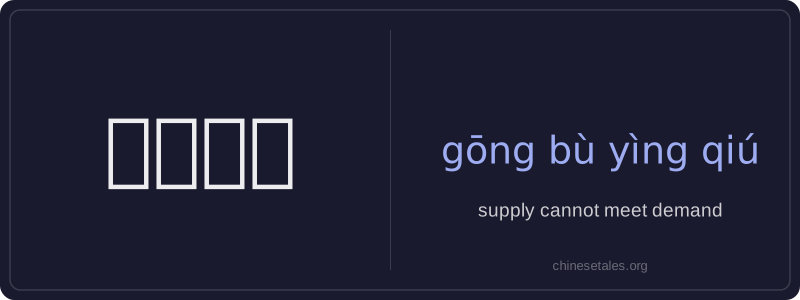
‘供不应求’ literally means ‘supply does not respond to demand’ — a fixed four-character idiom describing a market or situation where the available quantity of a good, service, or resource falls short of what people want or need. Each character contributes: 供 (gōng) = supply; 不 (bù) = not; 应 (yìng) = to meet, satisfy, or respond to; 求 (qiú) = demand or need. Together, they form a concise, formal expression widely used in economic reporting, business discussions, and news headlines.
This idiom conveys imbalance and scarcity, often implying rising prices, waiting lists, or competitive acquisition. It’s commonly applied to commodities (e.g., semiconductors, rare earths), labor markets (e.g., AI engineers), real estate, or even cultural products like concert tickets. Unlike casual phrases such as ‘in short supply’, 供不应求 carries an objective, systemic tone — it reflects structural mismatch rather than temporary shortage.
Example Sentences
Related Words
认同
‘认同’ (tóng rèn) is a verb meaning ‘to ident
面条
‘面条’ (miàn tiáo) literally means ‘flour str
背后
背后 literally means 'back + behind' and functions
认为
‘认为’ (rèn wéi) is a transitive verb meaning
不对
不对 (bù duì) literally combines 不 (bù), meani
中学
'Zhōngxué' literally combines 'zhōng' (middle)
见面
见面 literally means 'see face' — combining 见 (t
外语
‘外语’ literally means ‘outside language’ —