Word Explanation
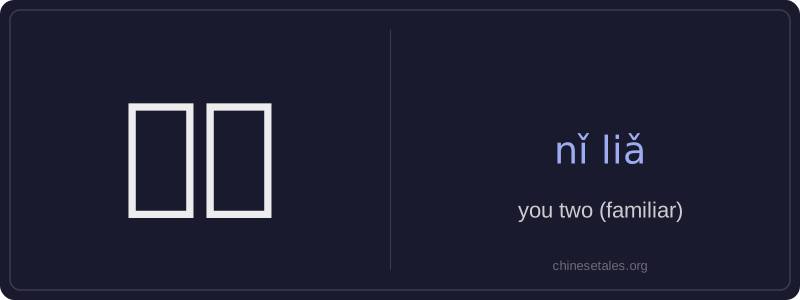
‘你俩’ is an informal, familiar pronoun meaning 'you two' — used exclusively when addressing exactly two people you know well, such as friends, family members, or classmates. It combines the second-person singular pronoun 你 (nǐ, 'you') with 俩 (liǎ), a colloquial contraction of 两个 (liǎng gè, 'two [people]'). Unlike formal alternatives like 你们 (nǐmen), which can mean 'you two' or 'you all', 你俩 is unambiguous: it always refers to precisely two people and carries a warm, intimate tone.
This term appears frequently in spoken Mandarin and casual writing — think of chatting with siblings, teasing roommates, or giving light instructions to a pair of close friends. It’s rarely used in formal settings, official documents, or with strangers or elders, where 你们 or more respectful forms are preferred. Because 俩 inherently implies 'two people', it never takes additional measure words or numbers — saying *你俩个 or *你俩人 is grammatically incorrect and unnatural.
Example Sentences
Related Words
认同
‘认同’ (tóng rèn) is a verb meaning ‘to ident
面条
‘面条’ (miàn tiáo) literally means ‘flour str
背后
背后 literally means 'back + behind' and functions
认为
‘认为’ (rèn wéi) is a transitive verb meaning
不对
不对 (bù duì) literally combines 不 (bù), meani
中学
'Zhōngxué' literally combines 'zhōng' (middle)
见面
见面 literally means 'see face' — combining 见 (t
外语
‘外语’ literally means ‘outside language’ —