Word Explanation
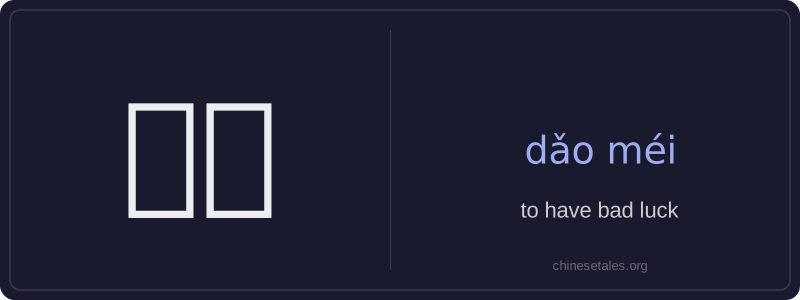
'Dǎo méi' literally combines 倒 (dǎo), meaning 'to fall' or 'to reverse', and 霉 (méi), meaning 'mold' or 'mildew'—a symbol of decay and misfortune in traditional Chinese culture. Historically, the phrase originated from the idea of 'reversing good fortune', as moldy grain signaled spoiled harvests and hardship. Today it functions primarily as an adjective describing a state of bad luck or misfortune, often used colloquially to express frustration or sympathy.
The term is commonly used in spoken Mandarin and carries a mildly informal, empathetic tone. It’s rarely used in formal writing but appears frequently in daily conversation, social media, and storytelling. Unlike nouns like 'bad luck', dǎo méi describes a personal, situational experience—e.g., missing a bus, failing a test, or spilling coffee—and often implies temporary, minor misfortune rather than deep tragedy.
Example Sentences
Related Words
认同
‘认同’ (tóng rèn) is a verb meaning ‘to ident
面条
‘面条’ (miàn tiáo) literally means ‘flour str
背后
背后 literally means 'back + behind' and functions
认为
‘认为’ (rèn wéi) is a transitive verb meaning
不对
不对 (bù duì) literally combines 不 (bù), meani
中学
'Zhōngxué' literally combines 'zhōng' (middle)
见面
见面 literally means 'see face' — combining 见 (t
外语
‘外语’ literally means ‘outside language’ —