Word Explanation
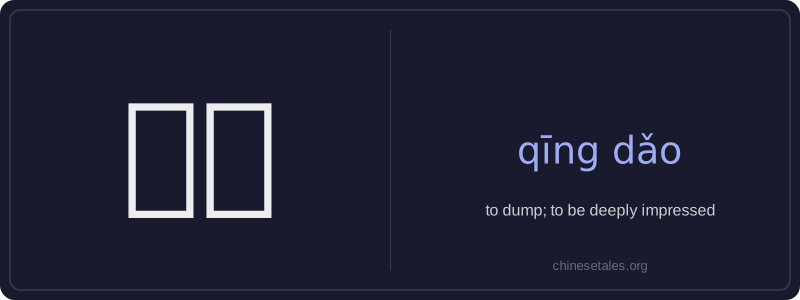
‘倾倒’ is a compound verb with two distinct but related meanings. Literally, 倾 (qīng) means 'to tilt' or 'to pour', and 倒 (dǎo) means 'to fall' or 'to overturn'—together they evoke the image of something being poured out completely or toppling over. In its concrete sense, it means 'to dump' or 'to discharge' (e.g., waste, liquids), often implying uncontrolled or large-scale release. This usage appears in environmental, industrial, or regulatory contexts.
In its figurative sense, ‘倾倒’ means 'to be deeply impressed', 'to be captivated', or 'to fall head over heels for' someone or something. Here, the imagery shifts to emotional 'overturning' — as if one’s heart has tilted and fallen completely. This usage is common in literary, media, or expressive speech, especially when describing admiration for celebrities, art, or ideals. Though both senses share the root idea of complete reversal or surrender, the figurative use is far more frequent in everyday spoken and written Chinese.
Example Sentences
Related Words
认同
‘认同’ (tóng rèn) is a verb meaning ‘to ident
面条
‘面条’ (miàn tiáo) literally means ‘flour str
背后
背后 literally means 'back + behind' and functions
认为
‘认为’ (rèn wéi) is a transitive verb meaning
不对
不对 (bù duì) literally combines 不 (bù), meani
中学
'Zhōngxué' literally combines 'zhōng' (middle)
见面
见面 literally means 'see face' — combining 见 (t
外语
‘外语’ literally means ‘outside language’ —