Word Explanation
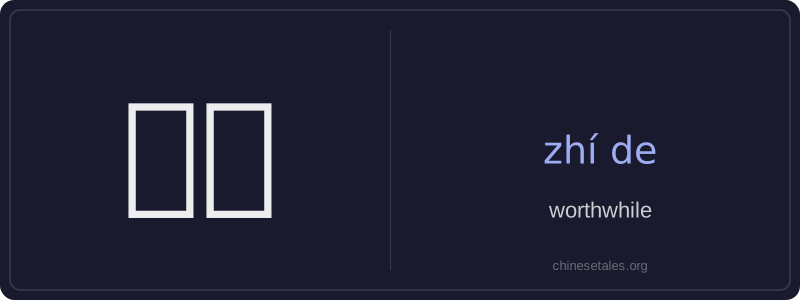
'值得' (zhí de) is an adjective meaning 'worthwhile' or 'deserving' — indicating that something merits the time, effort, money, or attention invested in it. The first character 值 (zhí) means 'to be worth' or 'to have value', while the second character 得 (de) is a structural particle here that forms a complement of result or evaluation; together, they function as a fixed two-character adjective, not a verb-object construction. It always precedes the noun or action it evaluates and is commonly used after verbs like '做' (do), '看' (watch), '买' (buy), or '尝试' (try).
This word expresses subjective judgment — the speaker believes the benefits or satisfaction gained outweigh the cost or effort involved. It frequently appears in recommendations, reviews, and personal reflections: '这部电影很值得看' (This movie is definitely worth watching). Unlike verbs, '值得' cannot take aspect markers (e.g., no '了', '过', or '在...'), and it never stands alone as a predicate without a complement or subject.
Example Sentences
Related Words
认同
‘认同’ (tóng rèn) is a verb meaning ‘to ident
面条
‘面条’ (miàn tiáo) literally means ‘flour str
背后
背后 literally means 'back + behind' and functions
认为
‘认为’ (rèn wéi) is a transitive verb meaning
不对
不对 (bù duì) literally combines 不 (bù), meani
中学
'Zhōngxué' literally combines 'zhōng' (middle)
见面
见面 literally means 'see face' — combining 见 (t
外语
‘外语’ literally means ‘outside language’ —