Word Explanation
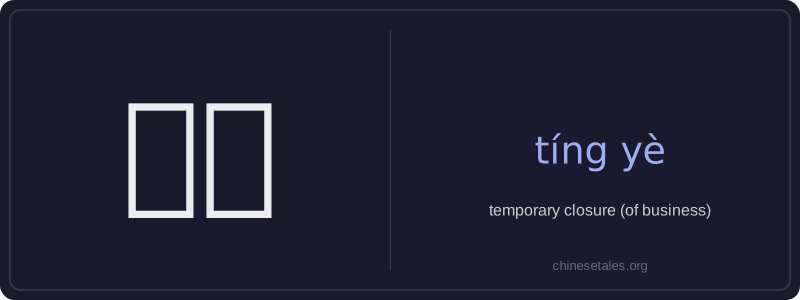
停業 (tíng yè) literally combines 停 (tíng), meaning 'to stop' or 'to pause', and 業 (yè), meaning 'business', 'enterprise', or 'professional activity'. Together, they form a formal noun meaning 'temporary closure (of a business)' — not permanent shutdown (which would be 歇業 or 倒閉), but a planned, often short-term halt in operations. It is commonly seen on signs outside shops, restaurants, or service providers, indicating the business is closed for reasons such as renovation, inventory adjustment, staff leave, or regulatory inspection.
This term carries a neutral-to-formal register and implies intentionality and reversibility. It’s rarely used for personal or informal closures (e.g., 'I’m taking a day off'); instead, it applies to registered businesses or institutions. Government notices, news reports, and official announcements frequently use 停業 when reporting on temporary suspensions due to public health measures, safety concerns, or licensing issues — always with the connotation that operations will resume.
Example Sentences
Related Words
认同
‘认同’ (tóng rèn) is a verb meaning ‘to ident
面条
‘面条’ (miàn tiáo) literally means ‘flour str
背后
背后 literally means 'back + behind' and functions
认为
‘认为’ (rèn wéi) is a transitive verb meaning
不对
不对 (bù duì) literally combines 不 (bù), meani
中学
'Zhōngxué' literally combines 'zhōng' (middle)
见面
见面 literally means 'see face' — combining 见 (t
外语
‘外语’ literally means ‘outside language’ —