Word Explanation
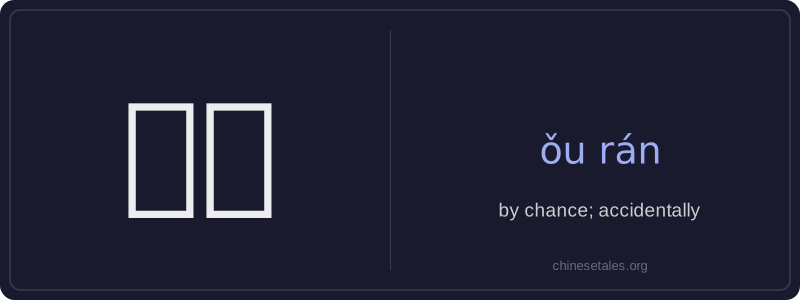
'偶然' (ǒu rán) literally combines 偶 (ǒu), meaning 'occasional' or 'by chance', and 然 (rán), a classical suffix indicating manner or state — together forming an adverb meaning 'by chance' or 'accidentally'. Unlike the verb '碰巧' (pèng qiǎo), which emphasizes fortunate coincidence, 偶然 stresses the unplanned, random nature of an event — often with neutral or slightly formal tone. It commonly modifies verbs (e.g., 遇见, 发现, 听到) and appears in written and spoken Chinese alike, especially when describing unexpected encounters, discoveries, or outcomes.
This word is frequently used in narratives, news reports, and everyday explanations to clarify that something was not intentional or premeditated. While it can appear as a noun in rare literary contexts (e.g., '这是个偶然'), its overwhelming usage is adverbial. Learners should note that it cannot directly modify nouns without additional structure (e.g., 偶然的事件 requires 的), unlike English 'accidental', which functions both adjectivally and adverbially.
Example Sentences
Related Words
认同
‘认同’ (tóng rèn) is a verb meaning ‘to ident
面条
‘面条’ (miàn tiáo) literally means ‘flour str
背后
背后 literally means 'back + behind' and functions
认为
‘认为’ (rèn wéi) is a transitive verb meaning
不对
不对 (bù duì) literally combines 不 (bù), meani
中学
'Zhōngxué' literally combines 'zhōng' (middle)
见面
见面 literally means 'see face' — combining 见 (t
外语
‘外语’ literally means ‘outside language’ —